
Advice for students as the year begins
Dear new and returning students:
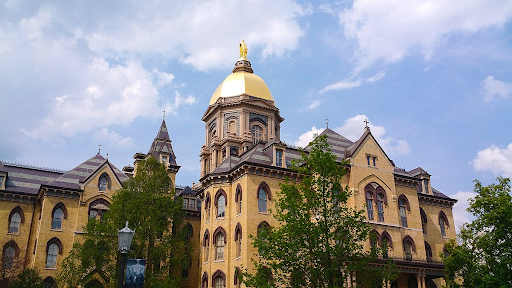
No doubt you have already received much in the way of counsel as to how to take full advantage of your time here and you may not have much interest in reading what an aging Holy Cross priest might have to offer you. However that may be, let me assure you that I pray for each of you, and specifically that your best and true self will emerge here on our beautiful campus—the truly crucial part of you that is ready to learn well, able to fashion real friendships, willing to serve others, and eager to witness to your faith.
There are no absolute guarantees in college, however. Much of what you “get” from Notre Dame will depend quite directly on what you “give” here. But before I offer you some advice based on my decades of teaching here and my past associations with many good and able students, let me address a couple of larger questions regarding the state of higher education in the United States. These may seem like matters that are rather remote from your day-to-day experience, but let me assure you they are not.
Elite higher education in the United States, of which Notre Dame is a part, has been burdened by woke ideology in recent decades. Fortunately, Notre Dame’s Catholic identity has helped it weather and limit some of the worst features of the ‘wokism’ that is still pervasive on American campuses and that interferes with the educational experience of many students.
Research by scholars at Northwestern University and the University of Michigan between 2023 and 2025 revealed a chilling reality that many students hide their true beliefs in order to navigate the social and academic minefield brought on by woke ideological conformity. This study revealed “a pervasive culture of self-censorship, driven by the fear of social ostracism and academic penalty.” The researchers argued that this ideological conformity stifles authenticity and halts genuine personal growth.
I trust your experience at Notre Dame won’t replicate the worst elements revealed by that study. But I want to encourage you to be brave in the classroom and not to conform your views to the perceived requirements of progressive, secular wokism. You have come to a Catholic university and you should expect to plumb the rich depths of the Catholic intellectual and moral tradition while you are here. I pray that you will find teachers and courses that allow you to do this. Discern well in this regard.
Engage your studies seriously and with integrity. Now you must navigate through the powerful temptations provided by the availability of artificial intelligence (AI). The whole area of AI promises to have major implications, not only for higher education but also for society as a whole, and perhaps even for your employment prospects. You should use AI responsibly. You have come to Notre Dame for an education that moves beyond mere technical competence in a field; you must search for true wisdom, rather than worrying about a lucrative “return on investment,”—or whatever the term is used these days by folks who see their education as merely job preparation, rather than a quest to understand what really matters in life. So please do your own work when it is appropriate, rather than relying on ChatGPT. You will find you learn more in the process. (By the way, let me assure you I have written this piece myself, rather than relying on artificial intelligence – perhaps you have grasped that already!)
Insightful students realize quickly that there is a great deal of entitlement in elite higher education these days. Do your best to resist it. Remember that your being a student at Notre Dame puts you among the most privileged young people in the world. You should certainly be proud and grateful for your opportunity to study here. But also be grateful for the gifts extended to you and resolve to use those gifts well and in the service of others, including the many folk less fortunate than you. Shape your character to be women and men who are ready to use your talents for the benefit of others. This, in the process, will prepare you to be good spouses and good parents—essential vocations for you in the future and, in some ways, more important than the specific career tracks you might pursue.
Be men and women who deeply respect yourselves and others. Show a special regard for all those folk at Notre Dame who serve you in one way or another—the wonderful folk who staff the various offices and the generous people who cook for you and clean up after you. Never pass up an opportunity to say thank you. Those simple words of gratitude can mean a lot, as you already know well.
It seems that a surprising number of young people today emerge from their undergraduate years feeling rather empty and insecure, as well as a bit confused and quite anxious. They studied and got their degrees but it appears that they missed out on crucial life lessons in the process. They now find themselves in a more distrustful and atomized world, and suffer increased levels of depression and anxiety. I hope Notre Dame will afford you a better outcome. Indeed, I pray that Notre Dame will allow you to clarify well the real meaning and purpose in your lives.
College might allow you to appreciate some of those lessons of history that normally involve some adversity and even pain—that things don’t always turn out right, nor the way we expect, and certainly not the way we want. Welcome adversity as an opportunity to grow stronger, to build your resilience for the greater challenges that will surely come after college. Yet, always recognize that you can turn to the Lord and to others to assist you in any difficulty or challenge. Knowing how to rely on others and, when needed, to extend support to others is a crucial element of your character that you must build and strengthen here.
In the end I pray that you don’t just drift along here at Notre Dame, but that as this year gets underway you begin a quest to follow the path God calls you to travel. God has a distinct plan for you and you must use your time at Notre Dame to discern it well and to prepare for your life vocation. Don’t be timid during your time here, but brave, and be willing to ask the toughest of questions within your academic classes and beyond them.
Here is a question for you to consider: “Good Teacher, what must I do to share in everlasting life?” (Mark 10:17). This was the rich young man’s question to Jesus, and as you know, he balked in his response. He declined the Lord’s invitation to full discipleship, but left sad because deep within himself he knew that he had refused to be what God called him to be. May you avoid a similar sadness. Instead, may each of you resolutely keep the Faith and truly make a difference.
Fr. Bill Miscamble is a professor emeritus of history and a member of the Rover’s board of faculty advisors. Contact him at wmiscamb@nd.edu.
Photo Credit: Matthew Rice, the Irish Rover
Subscribe to the Irish Rover here.
Donate to the Irish Rover here.