
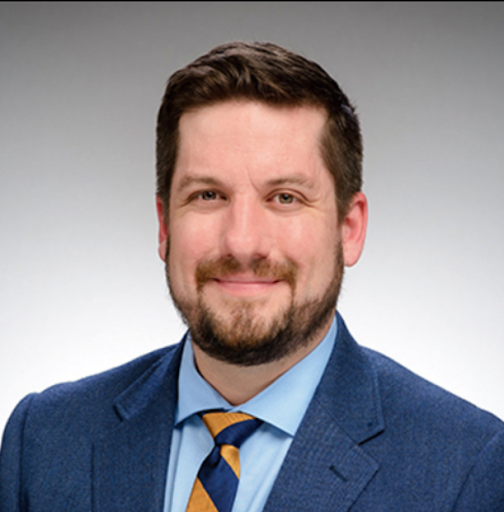
Noah Bradon speaks to the Rover on incarnational media, conversion story
Noah Bradon serves as the Director of Communications and the Executive Producer at the McGrath Institute for Church Life. In addition to leadership and strategy, his work focuses on building narrative ecosystems and directing storytelling initiatives that bridge the Academy and the Church.
What advice would you give to students on campus who want to bridge incarnational theology with the media and cultivate a sense of sacramental wonder on campus?
I would first encourage them to lean on the theological and catechetical foundation that they already know and trust. But then I would want them to know that the modern effort of evangelizing the digital continent is largely a work of building bridges, extending outward from digital encounters to the Incarnation. And this doesn’t always have to be highbrow, but can even be as simple as using social media to invite someone to Mass.
On a bigger level, it’s important to think about how the content you make contributes to people’s orientation to reality. A real danger in the digital world is divorcing communication from communion and active relationship, which is something that we as Catholics simply cannot do. This does not mean that the digital world can’t play a role, or that we should completely avoid social media, but rather that we should use it to be Christ to the other. This harkens back to something Pope Francis wrote, where he encouraged us to view the Good Samaritan as a model for our own engagements online. I think that there’s a really powerful example in there, because as Catholics who are engaging in the digital continent, in many senses, we are strangers in a foreign land.
I also think it’s important to consider technology not just as a set of tools, but rather as a new environment in which we interact with digital communications as sacramental opportunities. We don’t want people to stay in the digital world, but rather, we’re devising all of our digital content in a way that invites, gestures, and reorients toward incarnational encounters.
Pope Benedict has made it abundantly clear that we are called to evangelize the digital continent, but while also being aware of its dangers. Not unlike the missionaries of old, who had to venture out to this great unknown and encounter their surroundings on the fly, we’re still measuring the full scope of technology’s impact on our children, like the influence of social media on our kids and the incoming impact of AI. But disengagement isn’t an option, and the Church has made that abundantly clear. The only way I think that we can do that successfully is by maintaining a proper orientation—bridging, applying, and integrating our use of technology with incarnational theology.
Could you speak about your specific mission with storytelling for McGrath, and how you see that work serving the broader Church?
As I mentioned earlier, I’m a convert to Catholicism, which was in no small part due to beauty. Of all the transcendentals, beauty was what first attracted me to the Church—whether it was architectural beauty, musical beauty, literary beauty, or even the artistic and cultural legacy of the Church in all its forms. These things communicated truth to me at a time when I otherwise would not have accepted it. Really there was something so powerful about this “via pulchritudinis,” as Bishop Barron is so fond of referring to it, that I couldn’t help but be drawn in. It was only after I had been drawn in by the beauty, and then convinced by the goodness of the people, that I was actually convicted by Catholicism’s truth claims.
These things continue to drive both my work here at Notre Dame, and also my work more broadly post-conversion. In my past life I ran my own agency producing content for all of the corporate giants and major nonprofits, but these were missions that I didn’t personally care about. I was a “media mercenary” or “producer for hire” of sorts, where I would ask companies to tell me their mission, and I’d share it in a winsome way. Yet later on, I knew that I wanted to find ways to leverage my professional expertise in service of the Church. The natural culmination of this effort led me to McGrath specifically, and more broadly, to Notre Dame.
One of the things that I was reminded of when you were talking was John Paul II’s Letter to Artists, where he speaks about the artist looking out at the world, and capturing some of the creative gaze that God must have felt at the dawn of creation. Have you ever experienced a similar moment to the one JP II is describing in your own career?
Absolutely. I recently returned from a pilgrimage to Krakow, Auschwitz, and Birkenau with our Science and Religion Initiative here at the McGrath Institute, where I went to direct both a donor-facing recap video and a documentary about the problem of evil at the intersection of faith and science.
One of the reasons that I believe I was approached about this project was because I shared with Heather, my colleague here, that the first visible “domino” to follow my own conversion story was actually a cosmology class at Notre Dame as a freshman. [The professor] cleared up some big misconceptions that I had about science and its relationship with religion. The fact that the Big Bang theory was something that actually originated from a Catholic priest astounded me, especially as I was taught growing up that evolution was largely an atheistic theory. Not only did I realize I was wrong, but more importantly, I was presented with a view of reality that was open to the possibility of harmonizing faith and reason in such a profound way. This is when I first started to think that maybe religion was something worth taking seriously.
In what ways have you tangibly seen your relationship with Christ transform the work that you do?
What I hope to do through my work here at Notre Dame, and specifically through my work at the McGrath Institute, is to occupy a bridge role between the Academy and the Church. I have the interesting luxury of comparison as someone who came here as an undergrad student, who was not actively religiously, and then returned to get my master’s in theology here after becoming Catholic.
Immediately after my conversion, I started to revisit various aspects of my life. That started with personal development, obviously, but it quickly turned to my professional life and trying to redeem a lot of the acumen that I developed over the years to serve the Church. During my graduate studies here in the theology department, I had the good fortune of studying under several of my now colleagues, including John Cavadini, Brett Robinson, Tim O’Malley, and Lenny DeLorenzo.
During that program, and especially under the mentorship of Brett in the media ecology space and Tim in the sacramental theology space, I started to work on articulating what I call an “incarnational theology of communication for the digital age.” A lot of the projects that I’ve been mentioning are directly coming from that synthesization effort, and also a concerted effort to redeem and help others to reclaim the use of digital media.
How has your work specifically contributed to Notre Dame’s Catholic identity?
Here I might mention the Sacred Spaces Project, which is an interactive, media-enhanced campus pilgrimage developed to showcase the sacred spaces that line Notre Dame storied grounds, while igniting a sense of sacramental wonder. Inspired by a desire to elevate the institute’s existing campus pilgrimage booklet, the project serves as both a reminder and an invitation to the Notre Dame community: remember our beloved university’s identity, ground yourself in the sacred, become pilgrims of hope.
Elizabeth Mitchell is a junior majoring in the Program of Liberal Studies and theology. She also is fascinated by beautiful things, especially of the literary kind. To send your favorite recommendations her way, email her at emitche8@nd.edu.
Photo Credit: McGrath Institute for Church Life
Subscribe to the Irish Rover here.
Donate to the Irish Rover here.