
Notre Dame responds to Dilexi Te
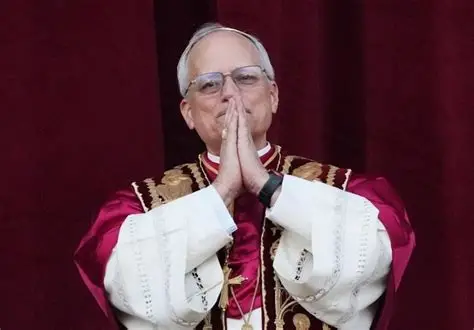
Pope Leo XIV recently released the first major writing of his pontificate, an apostolic exhortation titled Dilexi Te (“I have loved you”). Focusing on the themes of love for the poor and service to neighbor, Pope Leo’s words were written as an invitation to all Christians today.
“The main key theme [of Dilexi Te] is that God is a God of love, and every human being is created in the image and likeness of God,” John Staud, Director of Notre Dame’s Alliance for Catholic Education, told the Rover. “It’s an exhortation to all of us to do a better job of addressing some of the structural inequalities of the world.”
The exhortation is the most recent papal writing within Catholic Social Teaching, a movement of teachings concentrated on building a holier and more just society. As the Catechism of the Catholic Church teaches, the Church’s Social Teaching “provides criteria for judgment; it gives guidelines for action” (CCC 2423).
Dr. John C. Cavadini, Director of the McGrath Institute for Church Life and Professor of Theology, noted the pope’s emphasis on the “specifically theological character” of the Church’s relationship to the poor. In an email to the Rover, he explained, “The major [idea] is that care for the poor and love of the poor is intrinsic to Christian identity and to the mission of the Church, not an optional ‘add-on.’”
Cavadini continued, quoting the exhortation, “‘For Christians, the poor are not a sociological category but the very flesh of Christ who became poor for us.’ We do not fully comprehend or encounter Christ if we reject or neglect the poor.’”
Gabriel Wollak, a first-year architecture student, told the Rover that he was drawn to the pope’s emphasis on service to others: “[The exhortation focuses] on how we can actually live the Gospel out, and actually take this love—this heart that beats for us, that is the Lord’s— and put that love into action. It is through service, particularly to the poor, to the marginalized, to those who are not treated fairly, as Pope Leo included.”
The exhortation is “in some ways not [Pope Leo’s] first major writing; it is [rather] the completion of a project Pope Francis began,” explained Cavadini. “The late Pope Francis began work on Dilexi Te after writing what would be his final encyclical, Dilexit Nos (“He loved us”), which focused on the Sacred Heart of Jesus, encouraging a devotion that has been experiencing a resurgence among American Catholics and in the wider Church.”
The two writings are inherently connected to each other. Focusing on the relationship between service and devotion to the Sacred Heart, Dilexi Te explains that “in this call to recognize [Jesus] in the poor and suffering, we see revealed the very heart of Christ, his deepest feelings and choices, which every saint seeks to imitate.”
“I think primarily the way to implement Dilexi Te is to … prioritize Mass, where we actually get to take on Jesus’ heart and see it and contemplate it,” said Wollak. “It’s the strongest factor in fostering an environment of service to the poor.”
Staud remarked that Pope Leo’s exhortation is a message for Catholics to “figure out, ‘What am I called to do with my life, and how am I called to extend myself for us, for others?’ It all boils down to, ‘Did I see Christ? Did I see God in everyone I encountered?’”
“Although it involves addressing social structures that perpetuate poverty, Christian service to the poor cannot be reduced to a political program,” Cavadini cautioned.
He continued, “There is an intrinsic personal dimension of accompaniment, outreach, and love which no political structure can provide, and therefore almsgiving, our personal action on behalf of the poor, can never be obsolete.”
Furthermore, Cavadini added that “Leo advises almsgiving, direct personal caring for anyone whose poverty of any kind makes them invisible to us or inconvenient. God’s compassion is toward the poverty and weakness of all humanity. We can encounter this poverty and weakness in the materially poor, but also in the lonely, the sidelined, [and] those whose personal habits make them difficult to love.”
“There’s so many different ways that we can serve the poor, even in the midst of our lives at Notre Dame,” Wollak voiced. “The important part is having that time for silence and taking on the Lord’s heart, and then being aware and just looking for ways to serve those poor.”
Luke Fisher is a freshman from Detroit living in Siegfried Hall. He is majoring in theology and also struggling his way through the Program of Liberal Studies. If he’s not snacking on almonds or wishing for more snow, you can usually find him doing the chapel crawl around campus. To join in (or chat), reach out at lfisher8@nd.edu.
Photo Credit: Tasnimnews.com
Subscribe to the Irish Rover here.
Donate to the Irish Rover here.