
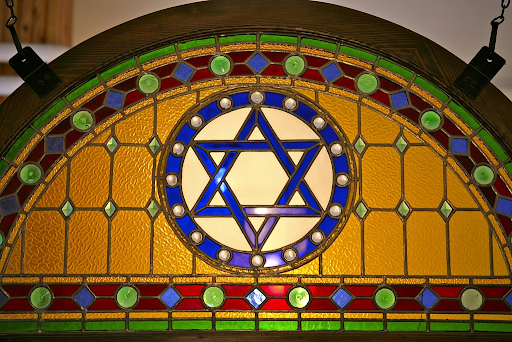
This semester, Notre Dame is hosting multiple events focused on Judaism, including the Nanovic Institute’s recent International Holocaust Remembrance Day lecture and multiple upcoming seminars. In light of these events, the Rover sat down with various professors and students to discuss the relationship between Judaism and Christianity, from the early Church to campus today.
Judaism’s relationship with the Catholic Church is an age-old question that remains relevant. Jeremy Brown, Assistant Professor of Jewish Studies, stressed the importance of Catholics understanding Judaism in an email to the Rover. “Dialogue with Jews is an urgent priority for the Catholic Church,” he said.
Brown explained, “Christians define themselves in a dynamic relationship to Jews and Judaism, and it is critical to understand who Jews are and what Judaism is—beyond stereotypes and caricatures, but on their own terms—if one seeks to understand oneself and one’s community as Christian or specifically Catholic.”
In their comments, multiple professors referenced Nostra Aetate, a declaration from the Second Vatican Council concerning the relationship between the Church and non-Christian religions. David Lincicum, the director of the Master of Theological Studies Program and a scholar of Christianity and Judaism in Antiquity, mentioned the document in an email to the Rover.
“It’s important to remember that Jesus lived and died a faithful Jew, and all of his first followers were Jewish,” Lincicum pointed out. “In the language of both Romans 11 and Nostra Aetate, Judaism is the trunk from which Christianity takes its life.”
The concepts detailed by Nostra Aetate address a long history of both rich dialogue and deep pain. Tzvi Novick, Abrams Jewish Thought and Culture College Professor at Notre Dame, summarized some of this history to the Rover, saying, “You have in the early Christian centuries what scholars sometimes refer to as the parting of the ways, in which Christianity becomes something distinct from Judaism: Having begun as a circle of Jews with particular beliefs about this man, Jesus, it becomes a distinct religious formation.”
Addressing the Middle Ages, Novick said, “There are moments of and a milieu of intellectual exchange, and there are Christian Hebraists of different sorts in the Middle Ages, and then in the early modern period. … But the basic undercurrent is discrimination, hostility—punctuated by instances of real, life-taking violence.”
Novick described Nostra Aetate, published in the late 20th century, as the “real watershed” in the relationship between the Church and the Jewish people, saying, “There, the Church rejects antisemitism, rejects the charge of deicide, rejects the idea that Jews, then or now, are collectively responsible for the crucifixion of Christ.”
In the spirit of Nostra Aetate, Notre Dame has dedicated itself to studying Judaism in various ways. The Theology Department includes a committee on Jewish Studies, which coordinates events, research opportunities, and study abroad experiences.
Brown praised Notre Dame’s studies on Judaism, saying the university is “not merely reaching a bar for teaching and research in Jewish studies that is offered elsewhere, but setting a standard.”
Notre Dame also provides opportunities for students to learn about Judaism outside the classroom. The Nanovic Institute recently hosted Eliyana Adler, Professor of History and Judaic Studies at Binghamton University, for an International Holocaust Remembrance Day lecture. This past autumn, Novick organized an event commemorating the 60th anniversary of Nostra Aetate. The conference occurred in Israel but was livestreamed to campus.
Meanwhile, the Department of German, Slavic, and Eurasian Studies will host its eighth biennial German Jewish Studies workshop in late February. In March, the Theology Department will welcome scholars of Judaism from various universities for the History of Philosophy Forum, which is focused on Jewish philosophy this year.
Lorin Aknin, a sophomore who serves as Vice President of the Jewish Club of Notre Dame, told the Rover about her experience in a class on literature of the Holocaust. “The fact that all of those students were interested in engaging with that kind of discourse on the Holocaust and on Jewish history was really inspiring.”
The Jewish Club’s president, Zane Zachary, spoke about his experience as a Jewish student on campus, praising the environment of respectful dialogue. He told the Rover, “I feel that I’ve been treated very well, and I think the histories of Christianity and Judaism play into each other very well, because there is a shared history.”
Novick also emphasized the shared history that Zachary pointed out, noting that studying Judaism at a Catholic school is especially beautiful because of the unique relationship between the two faiths. “You could do a comparative theology course on Catholicism and Hinduism, for example, or Christianity and Islam. … But the Church’s relationship with the Jewish people is just categorically different.”
Lincicum had similar sentiments, saying, “We must constantly examine our debt to Judaism, a posture that leads us to gratitude to our Jewish contemporaries and recognition of them as recipients, as Paul says, of the irrevocable call and mercy of God.”
Editor’s note: This article was altered after publication to correct a misattributed quote.
Clare Hettich is a freshman from Maryland studying the Program of Liberal Studies and theology. She blames her messy room, awful sleep schedule, and terrible vision on having too many books. To borrow a well-loved book, email chettich@nd.edu.