
Over the past several months, federal prosecutors have charged dozens of individuals in connection with a sweeping fraud scheme in Minnesota that they allege siphoned billions of dollars from federal and state grant programs. At the center of the case are accusations that members of the Somali diaspora created shell companies—many nominally operating in the childcare sector—to claim public reimbursements for meals and services that prosecutors say were never provided, or were wildly overstated, to the children they purported to serve.
Fraud investigations in Minnesota trace their origins to Feeding Our Future, a Minnesota nonprofit that emerged during the COVID-19 pandemic as a major sponsor in federal child-nutrition programs. According to prosecutors, pandemic-era emergency rules weakened oversight and allowed the organization to approve a rapidly expanding network of meal sites, many of which claimed to be serving tens of thousands of children each day. Investigators allege those claims were propped up by falsified attendance records, inflated meal counts, and shell vendors used to launder public funds.
As the probe has expanded, attention has shifted to a broader web of daycare operators and meal sites. Among them is the Quality Learning Center—misspelled on its own signage as “Quality Learing Center”—which prosecutors are investigating for potentially siphoning millions in childcare funds for services that were grossly exaggerated on paper. The daycare center abruptly closed last month.
Beyond the formal indictments, parallel reporting has pointed to similar alleged abuses across other federally funded programs tied to Somali-run businesses. Several of these issues were first highlighted by independent journalists, including YouTuber Nick Shirley, whose reporting helped draw public scrutiny to questionable billing practices and lax enforcement long before government audits caught up.
Federal authorities now estimate that the total amount lost could exceed nine billion dollars—nearly equivalent to the entire Gross Domestic Product (GDP) of Somalia. If confirmed, the Minnesota case would rank as the largest welfare-fraud scheme ever uncovered in the United States.
Reports suggest a significant amount of the stolen money was sent back to Somalia, where remittances make up roughly 25 to 40 percent of total GDP. Additionally, an investigation by City Journal found that some of this remitted money was even diverted to fund international terrorist group Al-Shabaab, an Al-Qaeda affiliate in Somalia.
In a brief comment to the Rover, accounting Professor Jeffery Miller gave a pragmatic view of how the United States should handle this fraud, saying that “despite the complications of uprooting fraud and enforcing tax law in such a large country; if the fraud reaches a level intolerable to the country, national intervention in some form is necessary.”
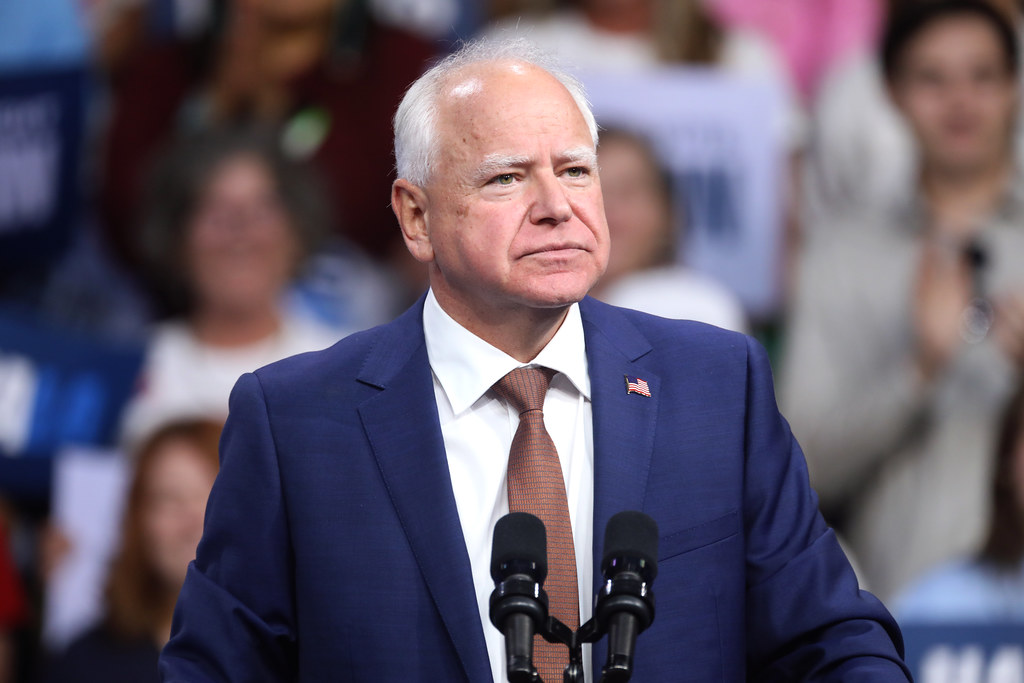
The scandal has had numerous consequences for state and federal politics. On the state level, Democrat Governor Tim Walz of Minnesota, under whom the alleged fraud took place, ended his bid for re-election this November, citing the scandal as a reason for his decision.
On the federal level, President Donald Trump has responded to the scandal by revoking Temporary Protected Status (TPS) for Somali migrants saying that “they contribute nothing” and that he does not “want them in our country.” He has also ramped up deportation operations against illegal immigrants in the Minneapolis area. To support these actions, Trump cited a Center for Immigration Studies report that showed that over 81 percent of households led by Somali immigrants consume some form of welfare, compared to 21 percent of those headed by native-born citizens.
Notre Dame students reacted with shock at the scale and audacity of the fraud, but differed on how authorities ought to respond.
Third year law student Will Donahue argued that the perpetrators had taken advantage of decades of American trust and goodwill. “Americans have been the most welcoming people in the world for decades. We wanted to create an environment where all could feel welcome,” he told the Rover.
“It’s very disappointing to see what some groups of people have done with that opportunity,” Donahue continued. “Our suicidal empathy needs to end and we need to send these people home.”
Junior Jack Docherty echoed those sentiments, and similarly argued for stricter limits on Somalian immigrants, whom he suggested “do not belong in the West.”
A Pasquerilla East sophomore, speaking under the condition of anonymity, condemned the fraud but defended the Somali diaspora. “Stealing is wrong, but blaming the entire Somali community for the actions of a few people is even worse. Somalis are our neighbors, friends, and colleagues, they’re hardworking people, and help to make this country great,” she said.
“And furthermore, the irony of a White, colonizer nation accusing minority groups of ‘stealing’ shouldn’t be lost on anybody,” she concluded.
Shri Thakur is a senior studying economics, French, and constitutional studies; however, he is considering dropping out to start a daycare business in the Minneapolis area. He can be reached at sthakur3@nd.edu.