
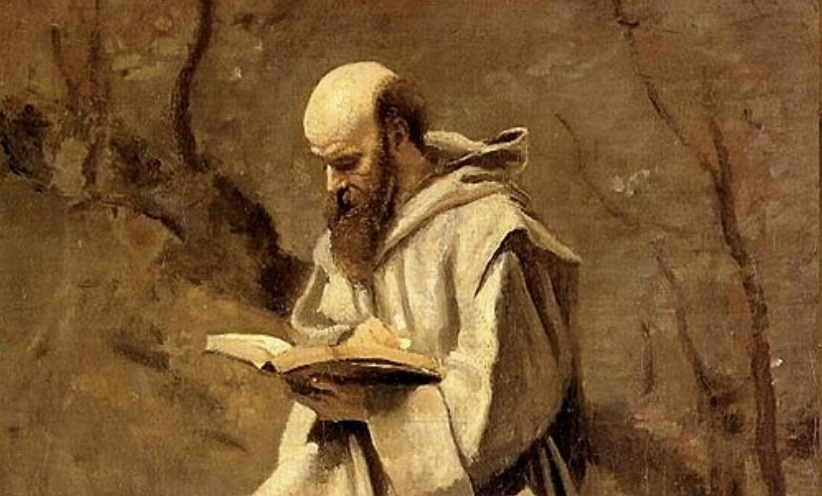
The United States Conference of Catholic Bishops (USCCB) recently announced a new translation of the Bible—the Catholic American Bible—and a new Liturgy of the Hours, Second Edition, for use by Catholics. These texts, which will be released on Ash Wednesday of 2027, will feature translations more accurate to the original languages, include an entirely new version of the Psalms, and offer new study tools, among other updates.
Discussing the two liturgical texts to be updated, Fr. Brian Ching, C.S.C., Rector of the Basilica of the Sacred Heart and Director of Liturgy in Campus Ministry, told the Rover, “[They] are two separate things to take into consideration. The retranslation of the Liturgy of the Hours is not a standalone reality. It’s part of a much broader movement that began in 2001 with the publishing of a document called Liturgiam Authenticam. It expressed the Church’s desire [for liturgical texts] and laid out a series of translation principles. It asked the Church to be a little bit more formal in the way it makes translations from the original Latin into the vernacular languages.”
Michael Urban, a senior studying theology, explained that this new style of translation is intended to help Catholics better enter into the sacred nature of praying with the psalms and scripture. “I think a new translation applies broadly … they’re meant to accomplish a goal,” Urban told the Rover. “[It’s] to make it easier or more effective for praying. I think it matters a lot to how we pray because the Liturgy of the Hours is the prayer of the Church.”
The upcoming second edition of the Hours includes an entirely new translation of the core text of the psalms by the monks of Conception Abbey in Missouri, known as the Abbey Psalms and Canticles. In addition, elements such as the intercessions, propers, and antiphons are being revised, and nearly 300 hymns are being translated from Latin for the first time.
Alex Mitchell, a senior majoring in philosophy and theology, told the Rover that he was particularly looking forward to the new hymns: “With the new hymns being added there’s now [one] for each particular liturgical day and for the different hours. I think it creates a stronger association between the [prayers] of the day and something that’s really beautiful. A lot of these hymns are very ancient, and it’s nice to see them finally being brought into full light. They’re a lot more traditional [but] also more literal.”
The upcoming Catholic American Bible has received similar updates to the new Liturgy of the Hours. They share the same Abbey Psalms and Canticles, a translation which focuses on accuracy and chantability. The new Bible will also have an entirely revised New Testament, along with brand new notes and introductions.
The Catholic American Bible is a move towards formal equivalence, a translation method that focuses on closeness to the original Greek and Hebrew. Additionally, another goal of the new translation was to have one common Bible used across liturgies, the Divine Office, theological study, and personal reading.
“With the advent of this new translation of the Hours, and especially the new Psalter in the [Divine] Office, the Church in the United States wanted to create one unified liturgical Bible,” explained Fr. Ching. “They [want] one Bible in which all of the readings you hear in the liturgy—whether that’s the Liturgy of the Hours or at Mass—would be in one place.”
“I think it’s especially important because of the accessibility of the Bible,” said Urban. “It’s much more important that they have good translations, but also that the messages … that [Catholics] are prompted to think are good. There’s a cultural thrust to have a personal interpretation over a more magisterial translation for a variety of reasons, but we [need] to do it in light of the magisterium. [The Catholic American Bible] is making it as unambiguous when it comes to the Catholic teaching as possible, while maintaining very strict[ly] to the historical and actual meanings of the words.”
Fr. Ching continued: “It’s taking the work in the translation of the newer American Bibles, taking the work done for the Psalter, and pulling those things together so that a Catholic can say, ‘Here is the Bible that I own, and in this are all of the things that I hear at Mass and praying the office and et cetera.’ This way there’s no more hunting for different places and sources. That’s what the liturgical version of the Bible—this Catholic American Bible—is hoping to achieve.”
Luke Fisher is a freshman from Detroit living in Siegfried Hall. He is majoring in theology and also struggling his way through the Program of Liberal Studies. If he’s not taking random naps or having his 17th muffin since breakfast, you can usually find him doing the chapel crawl around campus. To join in (or chat), reach out at lfisher8@nd.edu.