
One summer in high school, I went on a week-long service trip to a small, remote town in Colorado. On our day off, we drove to the Great Sand Dune National Park, which boasts the tallest sand dunes on the continent.
Midway through a scorching trek up the tallest peak, we suddenly noticed how quiet it was. On a whim we stopped and stood still for exactly one minute … a little group, no more than a dot to the bare-headed mountains that towered over us on all sides. The quiet was so intensely complete it left my ears ringing. It was jolting, and as I stood there, I instinctively tried to pick up sounds around me—perhaps the talk of other hikers, their voices muffled by the immense landscape, or the gleeful screams of kids as they sandboarded down the slopes. I was bewildered and a little daunted when there were none.
This struck me. Why am I afraid of silence?
Our modern world teems with noise. Gas station ads begin playing as soon as the fuel starts pumping. Restaurant TVs force their entertainment on diners. We feel the synthetic beat of a bass drum from the next car over. On campus, it’s just as bad. We walk past each other with noise-canceling AirPods glued in our ears, oblivious to the people we’re passing on the quad. Our dining halls blast Sabrina Carpenter at seven in the morning. TikToks and reels—with their ever-constant, ever-changing noises—rule our leisure, our conversations, and our thoughts.
After that fearful muted minute on the sand dune, I began a kind of experiment on myself. My senior year, I started driving to school in silence. Thirty minutes there, thirty minutes home: an hour of silence each day. I became much more observant, both of myself and others. I’d sit at a red light and watch people as they drove by. A minivan mom clutching her coffee with a glazed look in her eye. A corporate lawyer on the phone. The occasional teenager jamming in her car, which itself shook as if dancing along to the beat.
I suddenly became much more aware of myself, of what I was thinking, too. I was less intimidated by the pervasiveness of my thoughts. I’d run through conversations in my head, puzzling over a question asked in class or a moment of friendship I had glimpsed at school. A space that had previously been occupied by meaningless noise—the thoughts, words, and slogans of others—was now free.
People often talk about the incredible breadth of opinion that suddenly became available to the individual with the invention of the internet. While it’s certainly true that vast amounts of information are now at our fingertips, I also find it odd that we celebrate what I can only describe as a cultural brainwashing. Without silence, we ingest the same sorts of noise each day, and our thoughts become copies of what we hear. An entire generation is hooked up to one massive auditory feedback loop. We watch millions of “creators” and “influencers” all saying the same things on top of the same songs about the same topics, over and over again.
Silence brought me the gift of introspection and a simultaneous external awareness. In listening more to myself, I became a better listener to others. I became a better listener to the Other.
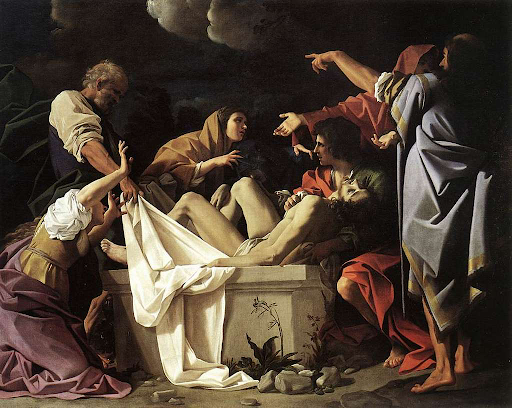
I think it’s no coincidence that the most powerful moments in the Gospels are ones of silence. The quiet of the Bethlehem stable on that cold night. The 30 hidden years in Mary and Joseph’s home. Christ’s silent stoop as he writes—what? something?—in the dust. The forty wearying days in the desert. The mute mouth before Pilate. The silence of the tomb.
On campus, too, our most hallowed spaces are ones of quiet. The hushed silence of the basilica. The calm of Our Lady’s grotto. The stillness of the great crucifix by the lake.
It is in my own quiet thoughts that I find Christ most easily. He is blocked by the noise, precisely because I’m not quite sure where I am in that noise. If I want to find Him, I must sit quietly and trust that He will come to me.
As we approach the holiest and most sacred week of our year, set aside some extra moments of silence to be with Him: take your AirPods out before walking to class, turn off Netflix as you wind down for bed, or dedicate a few minutes to a Grotto bench after dinner. Christ endured the quiet agony of the garden, bore the wordless hiss of the lash, hung hushed on the battered cross, and waited three days in the tomb for you. He is worth a space in your thoughts—a space that can only be offered when it is left empty, silent, and waiting.
Lucy Spence is a junior from McLean, Virginia majoring in the Program of Liberal Studies and piano performance, with a minor in philosophy. Reach her at lspence@nd.edu.