
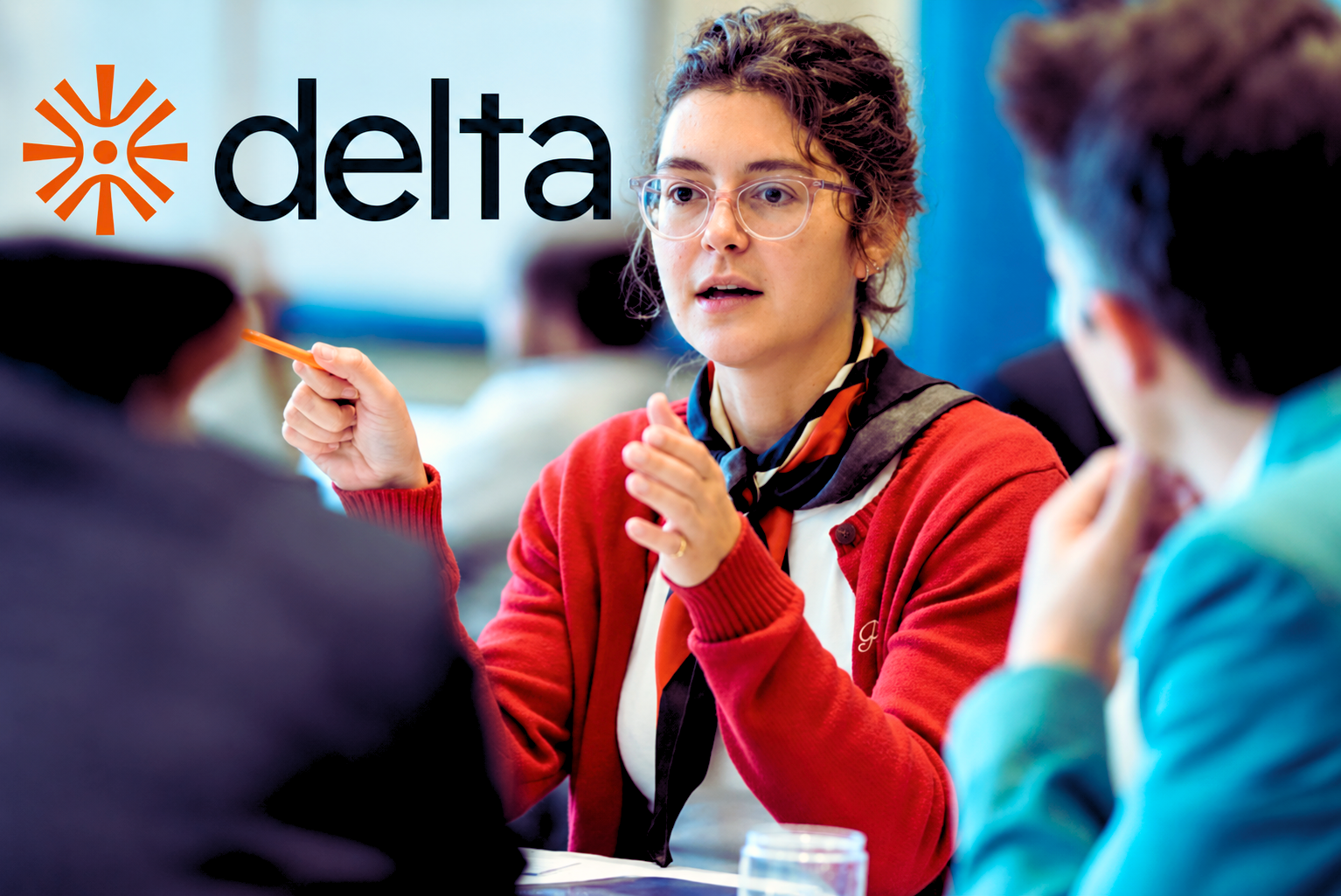
The Institute for Ethics and the Common Good (ECG) hosted the second annual DELTA Summit on AI, Faith, and Human Flourishing from September 21-23, bringing to Notre Dame’s campus “technologists, ecumenical faith leaders, educators, scholars, students, and policymakers for three days of events organized around the theme of navigating the AI transition in a way that centers human formation.”
The event was guided by the DELTA framework, an approach to AI ethics rooted in Christian tradition. The ECG conducted over 200 interviews with Christian faith leaders, ethicists, policy makers, technologists, and others to develop the framework.
DELTA is an acronym for Dignity, Embodiment, Love, Transcendence, and Agency. Founding Director of ECG and Professor of Philosophy Meghan Sullivan described the meaning of the acronym in an article. “The first letter is a call for human values to be at the center of everything we do with AI. The next four letters capture what is so remarkable and distinctive about human dignity.” The framework was introduced at the first summit in 2025.
This year marked the addition of 50 members of the GenDELTA Network, young adults ages 14-25 interested in wrestling with tough questions about AI and exploring how to tangibly support human flourishing and the common good. Adam Kronk, Director of the DELTA Network, described GenDELTA as “a group of young leaders that [the DELTA team] believe have the most agency in our society to get [AI] right.”
The summit kicked off with Mass in the Basilica of the Sacred Heart, celebrated by Archbishop of Chicago Cardinal Blase J. Cupich. In his homily, Cardinal Cupich posed a central question to attendees that would frame the summit’s discussion of AI: “What does it mean to be human?”
He continued, emphasizing AI’s potential to amplify the human tendency to ignore the dignity of others. “It presents us with a critical choice: we can allow AI’s deterministic logic to reinforce our human tendencies to replace the mystery of personhood with [predictive analytics] … or we can let the coldness of the mirror shock us into remembering what makes us human.”
The summit’s events included keynote speakers, small group breakout sessions, and workshops led by the DELTA Faith and AI Rapid Response Grant Recipients.
In a Tuesday keynote, art historian Elizabeth Lev, who teaches at Duquesne and the Pontifical University of Thomas Aquinas, offered an examination of Michaelangelo’s famed masterwork, The Last Judgement, pulling extensively from the history, literature, social and theological state of the time, to show both how Dignity, Embodiment, Love, Transcendence, and Agency played into the creation of the piece, but also how art has persistently moved human beings to experience them.
Bringing her examination around to the present, she posited that, “for the artists of artificial intelligence, the most beautiful, memorable, meaningful works of art have always revealed a pathos in an awareness of human suffering, mortality, sickness, weakness, and injustice as part of the human experience. The most enduring art has responded by uplifting and reminding viewers of DELTA.”
On Wednesday, Colin Fagan, Senior Manager for Global Strategic Partnerships at Special Olympics International (SOI), moderated a discussion with Nathan Cook, Chief Information and Technology Officer at SOI, titled “GenDELTA: AI as an Agent of Change.” In it, they lauded the ability of AI to aid productivity and predictive analysis, especially for those with intellectual and developmental disabilities, while stressing the dangers of implicit biases within LLMs and the inability of policy to police development.
Though there are evident pros and cons, Cook emphasized that the most important area of focus for GenDELTA especially is not comparison, but working towards a positive future. “Because I believe it is inevitable, we have to make sure the pros outweigh the cons. I don’t know that that’s organically going to happen if we don’t put effort into it. I think we have to set out to make the change that allows it to be positive.”
Notre Dame junior Jack Rankin, a member of the GenDELTA cohort, told the Rover, “I found the DELTA Summit to be an incredibly illuminating experience. It allowed me to learn from tech leaders, education consultants, Orthodox priests, Renaissance art historians, and a fantastic group of college and high school students.”
When asked for his biggest takeaways for Notre Dame students, Rankin recommended the recognition that at the center of forming the future of AI actually lies a recognition about our humanity. “Being human is essentially to realize someone else is real, and then ultimately to realize them as made in the image of God. Someone can say this long before they actually believe it, and acknowledging one another’s humanity is a shared and sacred endeavor.”
In a statement to the Rover, the ECG offered an invitation to students. “We welcome Notre Dame students to engage with the framework and the growing list of resources and readings on our website. We also welcome student perspectives as part of our growing GenDELTA network, and students can email ethics@nd.edu to get connected.”
Henry Omanga is a sophomore from Houston, TX studying philosophy and psychology with a minor in constitutional studies. If you ever want to discuss the degradation of country music, the best superhero movie of all time (The Incredibles), or niche sports, he can be reached at homanga@nd.edu.