
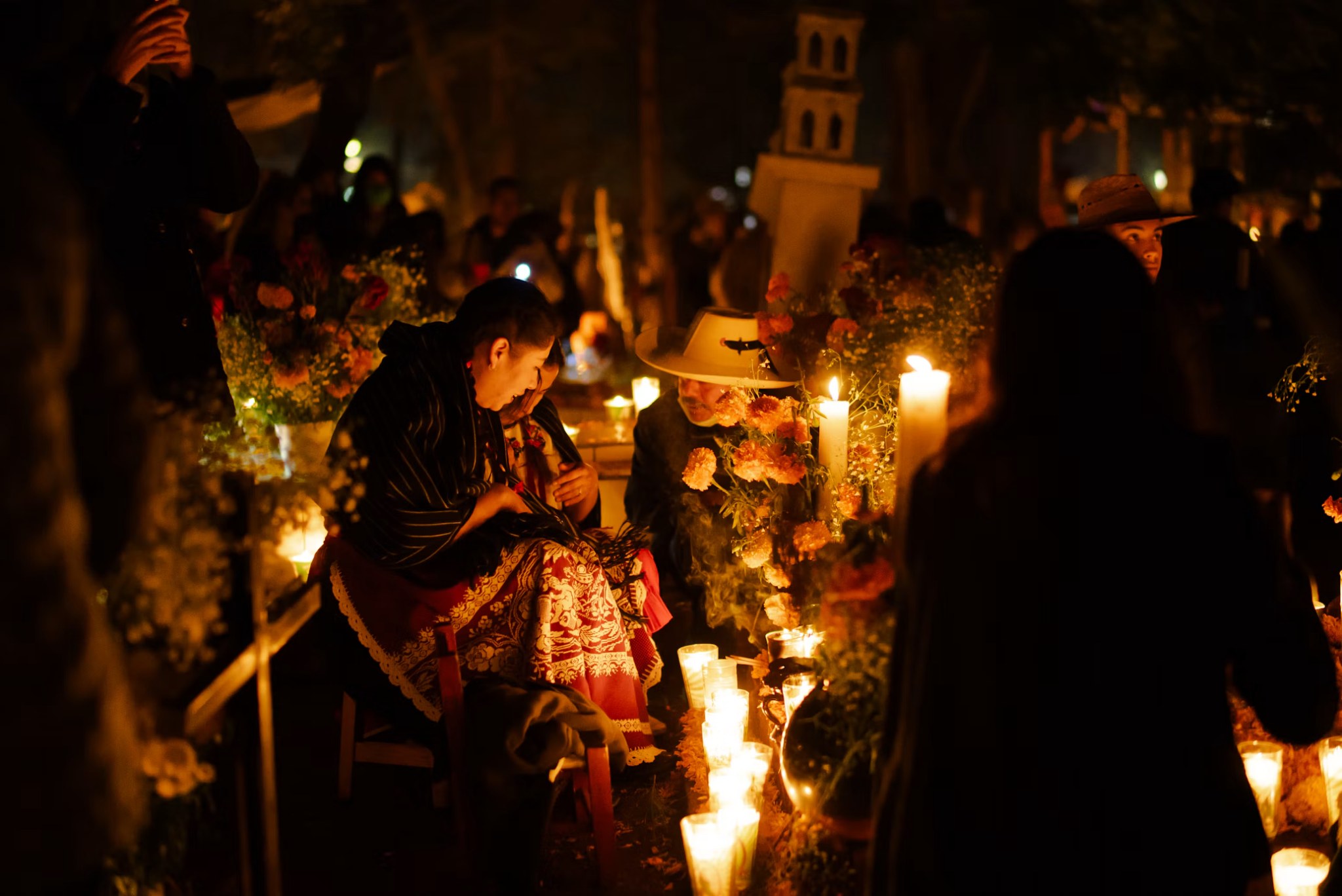
Observed by over 100 million people in Mexico alone and popularized by films such as Coco and The Book of Life, Día de los Muertos has become an international phenomenon. Today, while maintaining its cultural roots in Aztec, Mayan, and other Mesoamerican cultures, Day of the Dead is celebrated in many Catholic communities across the Americas, including at Notre Dame.
Día de los Muertos is celebrated after Halloween from November 1–2, not as an after-party or continuation, but rather as the main event to which the previous celebration was only a precursor.
The word “Halloween” comes from the phrase “All Hallows’ Eve,” referring to the night of October 31 before All Saints’ Day. From the first few centuries of the Catholic Church, martyrs have been honored with altars built atop their graves and prayers on the anniversaries of their death. However, it wasn’t until the eighth century that All Saints’ Day became a memorial for all the saints, not only martyrs.
For those participating in Día de los Muertos, November 1 is known as Día de los Angelitos. All Saints’ Day is dedicated to every person in heaven—known, or unknown—but Día de los Angelitos is only for deceased infants and children. The name originated from a widely held belief that children were pure enough to become angels upon death. November 2, Día de los Difuntos, is dedicated to all the deceased.
Families build ofrendas, which are altars decorated with photographs, personal belongings, and the favorite foods of the deceased. Ofrendas often display candles and bright marigolds to guide spirits back home. Incense, water, calaveras (sugar skulls), papel picado (tissue paper banners), pan de muerto (celebratory bread), and salt may be added based on local traditions. Many of these items are intended to call back the soul of the loved one and provide sustenance or comfort. Many families also add Rosaries, images of saints, or crosses.
These traditions have evolved over three thousand years from ancient Aztec practices. At that time, human skulls were placed on temples and used to honor the dead. The purpose of the month-long festival was to honor Mictecacihuatl, the Lady of the Dead, and her husband Mictlantecuhtli, who were said to rule over the ninth level of the underworld.
Families continued to interact with their dead in this way until the sixteenth century, when Catholicism was introduced to the Indigenous peoples by conquistadors and missionary priests. Día de los Muertos was moved from August to November. The image of the afterlife was drastically altered, but most of the practices remained unchanged, including the belief that souls cross over from the land of the dead into that of the living.
The modern-day celebration of the holiday has retained elements of its pagan Aztec origins, so Catholics cannot participate in all parts of the holiday. While some practices, such as the calling back of the souls of deceased relatives, are expressly condemned by the Church, some Catholics view the holiday as a reminder to pray for the dead.
Father Brian Ching, C.S.C., the rector of the Basilica of the Sacred Heart, told the Rover, “Día de los Muertos is an opportunity for us as Christians in general, but for the Hispanic community specifically, to honor their deceased relatives as part of a global, universal, Catholic mission of All Souls’ Day and the month of November. … The goal is both to remember our deceased ones and then to pray for their eternal repose.”
The message of Día de los Muertos, he said, is “remembering that we are part of something much bigger than ourselves. We’re part of not only the family we know but the entire lineage of ancestry. … We’re reminding ourselves that we have a connection to all of those people. The life of faith unites all of us, even across time. It’s also a healthy reminder that our time in this world is not forever. … In celebrating and honoring our deceased loved ones, it’s a pretty important reminder to us too that our goal should be heaven, that this world isn’t our final home.”
Día de los Muertos is celebrated annually at Notre Dame. This year, Adelante ND and ND Dining partnered on Friday, October 30, to provide a special menu. Festivities included face painting, crafting, and a Ballet Folklórico performance by the students of Folklorico Azul y Oro. An ofrenda was also created. Past ofrendas have featured photos of deceased relatives, flowers, papel picado, and candles.
“I submitted a picture of my grandma,” said first-year Rodrigo Vargas Soliz, who participated in the celebration. “In Bolivia, we call it ‘Todos Santos,’ but it’s the same idea. … Día de los Muertos is to remember and honor those [who have] passed away. They come to visit us November 1, and they stay with us for 24 hours until the next day.”
Rebecca Gebhart is a freshman studying biochemistry and theology. She’s allergic to caffeine and grass—two necessary components of a Notre Dame education. If you hated this article, contact her at rgebhart@nd.edu to invite her to a scenic coffee chat on the lawn.