
Rover interviews curator of global Dante exhibition
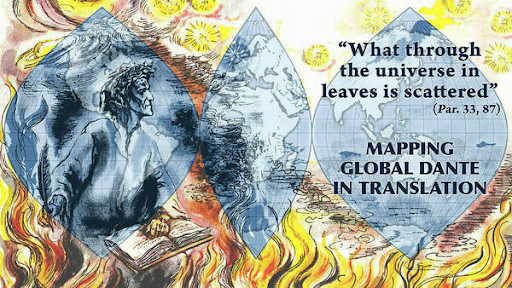
This year, the William and Katherine Devers program in Dante Studies at Notre Dame celebrates its 30th anniversary. The program was founded by an endowment from the Devers family to fund teaching and research into Dante throughout Notre Dame. To celebrate, the Devers program, in conjunction with the Center for Italian Studies, sponsored an exhibit and symposium to explore the reception and translation of Dante throughout the world. The exhibit will be open to the public in Hesburgh Library’s Rare Books and Special Collections throughout the Fall semester.
To learn more about these initiatives and Dante’s import across the globe, the Rover interviewed Mr. Salvatore Riolo, lead curator of the exhibit and panelist in last week’s symposium. Riolo is a fourth year Italian Ph.D. candidate at the University of Notre Dame, studying eighteenth-century translation and reception of Dante’s Divine Comedy.
First, a bit about yourself. Why Dante? When were you first exposed to Dante, and what inspired you to devote your studies to his work?
My first exposure to Dante—it sounds like a virus!—was probably when I was in elementary school. I’m Italian. [There, it] is very common to be exposed to Dante at an early age because of the role he has in [Italian] literary history. He’s considered to be the father of the Italian language, and he was the first one to write such an important literary work in Florentine, [laying] the basis for what would later be the Italian language. So you cannot overlook Dante.
I also started to work on Dante very late. It was only for my Ph.D. [Before, I mostly] worked with translation studies. Dante is an interesting case study for translation studies itself.
That leads nicely into the next question: Why are scholars interested in the reception and translation of Dante throughout the world?
One new trend is to look at what Dante means outside of this very small Italian context of the Middle Ages. It’s important to historicize text, but it’s also interesting to see how a text … can live many different lives because of the translation.
One example that I always give to the students when they visit the exhibit is the number of languages in which it has been translated: 70 languages. [That is] a lot, especially for a literary work, for a work that is so embedded in Christianity. It’s a very controversial work, and in some periods of history … it has been censored. Why then [translate] a work that is so controversial? There are multiple reasons, and it really depends on the language and on the time frame it has been translated into.
For example, the Christian component is very present, but it’s also a good representation of Western culture [and] to some extent of the specific Western culture that laid the foundation for European identity … in the 18th and 19th centuries. Translating Dante [also meant] to translate a part of our shared literary identity, because [he is] such a foundational author. If you look at Korea, the Christian community in Korea is bigger than in other Asian countries. Having the chance to read Dante is also [a chance] to connect with the origin of your belief in the West in this sense.
How did the exhibit come about?
The Notre Dame Dante collection has a very long history that starts actually in the 20th century, thanks to the passion for Dante of one of the brothers of the congregation of the Holy Cross of Notre Dame. Father [John] Zahm went to Italy and got into the Comedia, and he started what’s now the Notre Dame Dante collection. We have a very rich collection of 16th century printed editions of Dante because Father Zahm bought them in the 20th century.
What is the exhibit part of a larger program? What spurred the creation of this exhibit in particular this year?
This year we celebrate the 30th year of the program in Dante studies. Thanks to the generous donations of the Devers family, we have been able to … expand on Father Zahm’s collection, and there is a partnership between this program, the Devers program, and Notre Dame press. We publish every year a contribution about Dante studies or medieval studies in general, and we’re also celebrating with a book that came out this fall with Notre Dame Press called American Dantes, which celebrates the American legacy of Dante. Notre Dame is a part [of this legacy], because of the collection, the exhibit, and the Devers program.
Could you describe the curation process? What decisions were you and your team making? Was there anything that stuck out to you or that you learned as you curated this collection?
The main problem we had to face, which is not really a problem, is that we have a very rich collection. We started by creating a good narrative … to frame [the dialogues between translations]. After that, we created different themes for each different case. Each case tries to create something meaningful by itself. For example, translating Dante [gives] political relevance to a language. This is the case… in the Irish translation of Dante. If you can read … an author so representative of a cultural tradition [in your language] that means that your language is important too.
In deciding what to exhibit and what to exclude, a major component was, ‘What do we want to tell people? Why is it important to read Dante and why is it still read?’ Dante grapples with problems that are common to humanity in general, because he talks about the afterlife, and it doesn’t matter what your religion is, you grapple with this concept.
Our going thematically gave us the chance to create links between very different traditions, too. For example, you can create a link between the first North American translation of Dante and the first Japanese translation of Dante. The first translator of Dante in Japanese was educated on the West Coast of the United States. [He] was very fond of the Christian tradition and decided to translate Dante, but he couldn’t speak Italian, so he relied on the American translation of Dante. So … Dante goes from the West Coast of the United States to Japan instead of going eastward from Italy.
Darius Colangelo is a junior majoring in Mathematics and the Program of Liberal Studies. He loves coffee, misses mountains, and when he’s not dozing off in the Grand Reading Room, he can be reached at dcolange@nd.edu.
Photo Credit: https://dante.nd.edu/news-and-events/news/em-mapping-global-dante-in-translation-em-exhibit-opens-at-hesburgh-libraries/)
Subscribe to the Irish Rover here.
Donate to the Irish Rover here.