
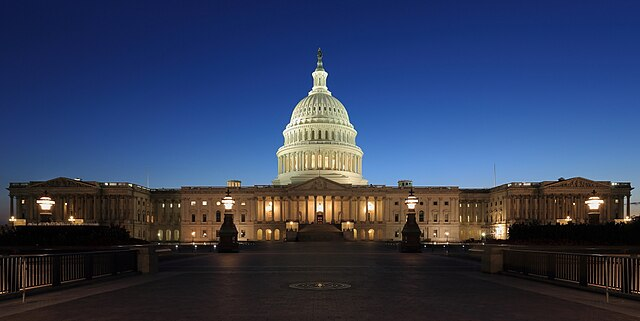
Since its establishment in 1998, the University of Notre Dame’s Washington Program has offered students the opportunity to engage with American political institutions while living in the nation’s capitol.
Similar to study abroad programs, the university allows students to participate in either a semester or summer program, where they spend time developing relationships and gaining experience in organizations of their interest. Administrators assist participants in obtaining internships conducive to their career aspirations.
Students receive academic credit for the internship program they choose in D.C., even if it is not explicitly political or policy-related. In addition to working a full-time internship, students are also required to enroll in a public policy course that allows them to connect with Notre Dame alumni and faculty working in the Capitol. Additionally, the program allows students to enroll in non-political elective courses taught by Notre Dame professors.
The mission of this program is deeply tied to the university’s concern for cultivating a student body responsive to Catholic obligations of citizenship and political participation. The official website of the program includes a quote from the United States Conference of Catholic Bishops (USCCB), which states, “In the Catholic Tradition, responsible citizenship is a virtue, and participation in the political life is a moral obligation.”
Dr. Thomas Kellenberg, the Executive Director of the Washington Program since its founding in 1998, referenced this Catholic call to civic duty in an interview with the Rover. He specifically referenced an excerpt from the USCCB document entitled “Forming Consciences for Faithful Citizenship: A Call to Political Responsibility” that writes, “As citizens, we should be guided more by our moral convictions than by our attachment to a political party or interest group. When necessary, our participation should help transform the party to which we belong; we should not let the party transform us in such a way that we neglect or deny fundamental moral truths or approve intrinsically evil acts.”
As the leader of this program, Dr. Kellenberg sees the political participation accessible within the Washington Program as fulfilling an inherently Catholic vocation tied intimately to the identity of the university.
In connection to its Catholic mission, one of the focal points of the program is the Human Rights Clinic, which offers “undergraduate students the opportunity to engage in meaningful, real-world human rights work through a variety of clinical projects and courses.”
According to its website, students involved in the clinic have assisted death row inmates, victims of censorship, and persecuted journalists through participation in prominent legal battles.
Upon graduation, 22 percent of the program’s alumni return to D.C. for their first positions in the workforce. Despite being primarily oriented toward a civic and political goal, 32 percent of alumni either enter into education, financial services, or non-profit industries. The leadership of the program consistently emphasizes that the networking available to students in this program reaches beyond political office.
Associate Director of the Washington Program Dr. Claudia Francis echoed this sentiment, telling the Rover, “Students intern at organizations across D.C.—not limited to government and policy, some work in media and private business. The professional opportunities and discernment that the Washington Program provides sets our students up for success in future careers in policy, law, business and more.”
She also commented on the program’s priority of producing student-leaders committed to discovering the interconnection of civics and virtue. She said, “There are many ways that the university encourages students to ‘be a force for good’; for many students who participate in the Washington Program, they find that calling to be shaping American government and policy.”
Donal Connaughton, a junior who participated in the Washington Program in the spring of 2025, told the Rover the program balanced both conservative and liberal ideologies, saying, “With respect to the ideological framework of the program, it is very open to all opinions, given that they have some sort of logical or factual grounding. I never felt that there was any ideological pressure from program administrators or professors.”
“On the topic of the political leanings of program participants, our cohort certainly had a healthy blend of liberal and conservative perspectives, but much of our class discussion was grounded in discussions that transcended those boundaries,” Connaughton added.
Julia Jacobson, a 2025 graduate now working with a public relations and consulting firm in D.C., attributed her success in finding a job in the Capitol to her “wonderful experiences” with the Washington Program.
Emma Duffy, a Notre Dame graduate and program alumna, commented on the ideology of program participants. “The students in the program had mainly liberal ideas, and it seemed to create a divide with those with more conservative ideals,” she explained. “However, students are instructed that they cannot intern at certain organizations, such as EMILY’s List, that include pro-choice agendas.”
“There seems to be a disconnect between student views and the university rules,” Duffy concluded.
Raymond Webber is a sophomore philosophy major. His favorite hobby is listening to Bishop Fulton Sheen homilies on YouTube. Contact him at rwebber2@nd.edu.