
New York is at the center of a growing national debate after Democrat Governor Kathy Hochul reached an agreement with the state legislature to legalize “Medical Aid in Dying” (MAiD) for terminally ill patients. The law, set to take effect in July, allows patients with less than six months to live to request medication that will kill them.
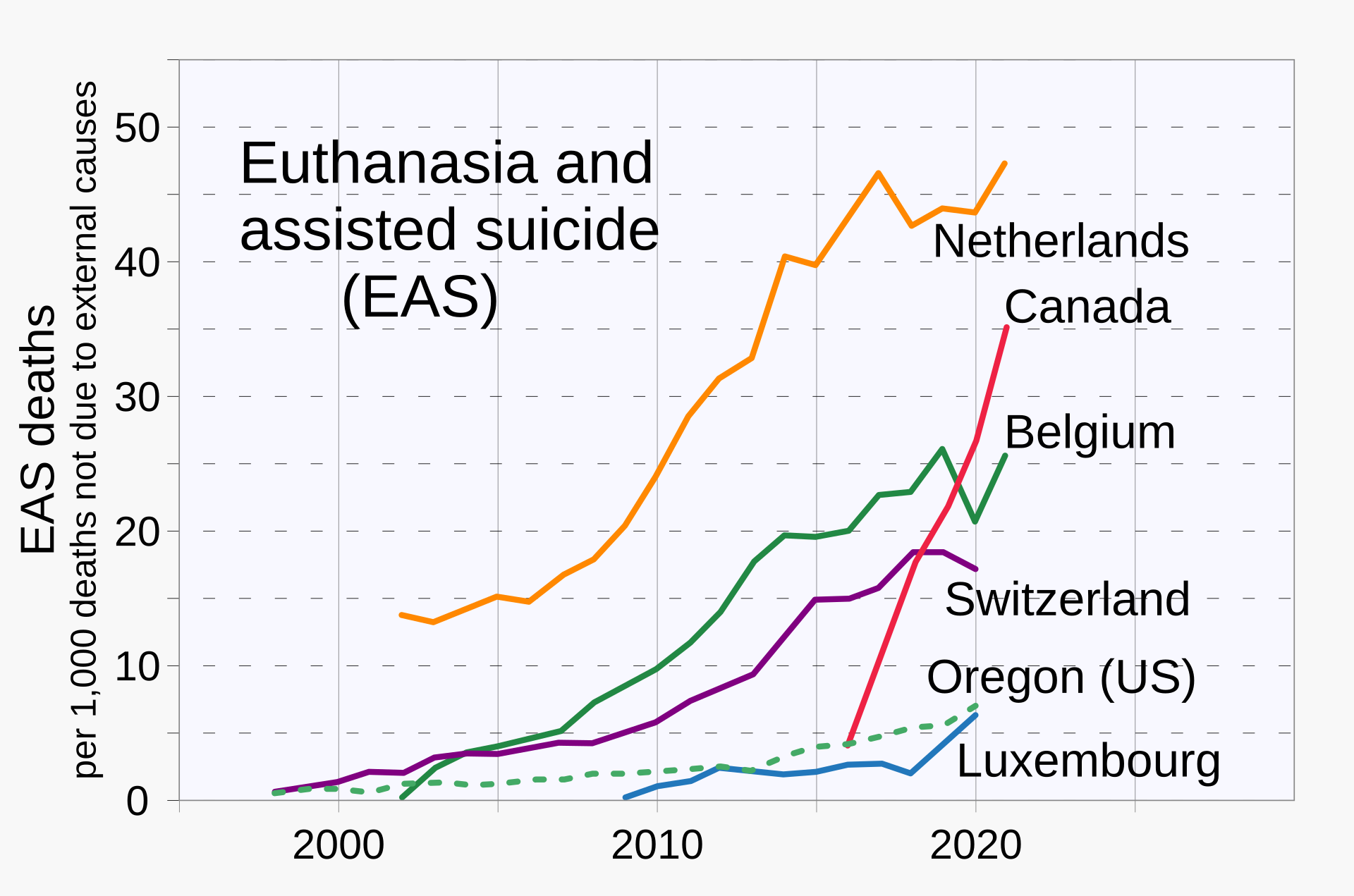
In order to receive the lethal medication, patients must make a recorded request, undergo a mental health evaluation, and wait five days before the prescription is filled. Ever since Oregon first passed a similar law, the Death with Dignity Act, in 1997, adoption of medical euthanasia has been widely growing, with New York becoming the twelfth state to allow a legal form of physician-assisted suicide.
The controversy around New York’s decision mirrors that of Canada’s euthanasia policy. First legalized in 2016 for individuals with terminal illnesses, Canada’s Medical Assistance in Dying Law was quickly broadened to include people whose deaths were not necessarily foreseeable, namely those suffering from mental illnesses like depression. Over the following years, MAiD has become the fifth leading cause of death in Canada.
Notre Dame students are divided over the new law.
Sophomore Kyle Ma told the Rover, “[F]rom the most fundamental sense, I’d say it’s probably more of a freedom; … you want them to make a rational decision. You don’t want doctors pressuring them into making the choice.”
A student in Carroll Hall, who asked to remain anonymous, supported the legislation while recognizing possible religious objections: “If you know they’re going to die and they’re in a lot of pain, … I don’t know if it’s kind to sentence someone to six months of suffering.”
Others firmly opposed the law and rejected the framing of euthanasia as a freedom. One freshman told the Rover, “Autonomy allows us to make free choices, but freedom would come from pursuing the good and the virtuous path. … [Assisted suicide] degrades the dignity of the individual.”
A student studying mechanical engineering explained, “[Y]ou’re just giving tools of painless death to the person and if it’s a sin I feel like it’s a little on them if they decide to end their life.”
Several opponents of the law appealed to their faith and the teachings of the Catholic Church.
Peter Onder, a junior, told the Rover, “It’s a shame that New York, like so many other jurisdictions in our country, has abandoned the sanctity of human life. The lie that New York is telling their citizens, the idea that ending a patient’s life on purpose is ‘healthcare,’ is abhorrent.”
Onder continued, “Other states and the federal government must oppose this law and protect the dignity of human life from conception until natural death.”
One freshman who criticized the legislation told the Rover, “It’s for God to give and to take life, in my opinion, and that’s in accordance with Church teaching. We should obviously treat people with compassion and respect, but Christ demonstrates very clearly upon the cross that good can come even from a difficult and suffering death.”
The freshman also expressed concerns about the implications of the law, saying, “History demonstrates that this is a slippery slope that can lead to extensions to perhaps people with disabilities or people that may be perceived with less dignity, simply as a result of things outside of their control. So I think … this is an obvious no for anyone of Catholic conviction.”
Notre Dame Right to Life denounced the New York decision in a statement to the Rover, saying, “[We seek] to promote the sanctity of all human life from conception to natural death; thus, we strongly condemn and oppose any legislation that violates the dignity of the human person. We firmly believe that life is a sacred gift from God that needs to be preserved and defended above all else. Intentionally seeking to cause the death of an individual, regardless of motive, is morally unacceptable and is contrary to the respect owed to God.”
The Right to Life statement continued, “Physician-assisted suicide or euthanasia is an action that unnaturally damages families by fostering grief and trauma. The medical profession is also altered, reversing its commitment to healing into a promotion of death and abandonment. Our organization encourages all students to remember that every human being possesses inherent dignity and to strive to promote life in a world so often overshadowed by death.”
Zachary Nicholson is a first-year finance student. He can be reached at znichols@nd.edu.