
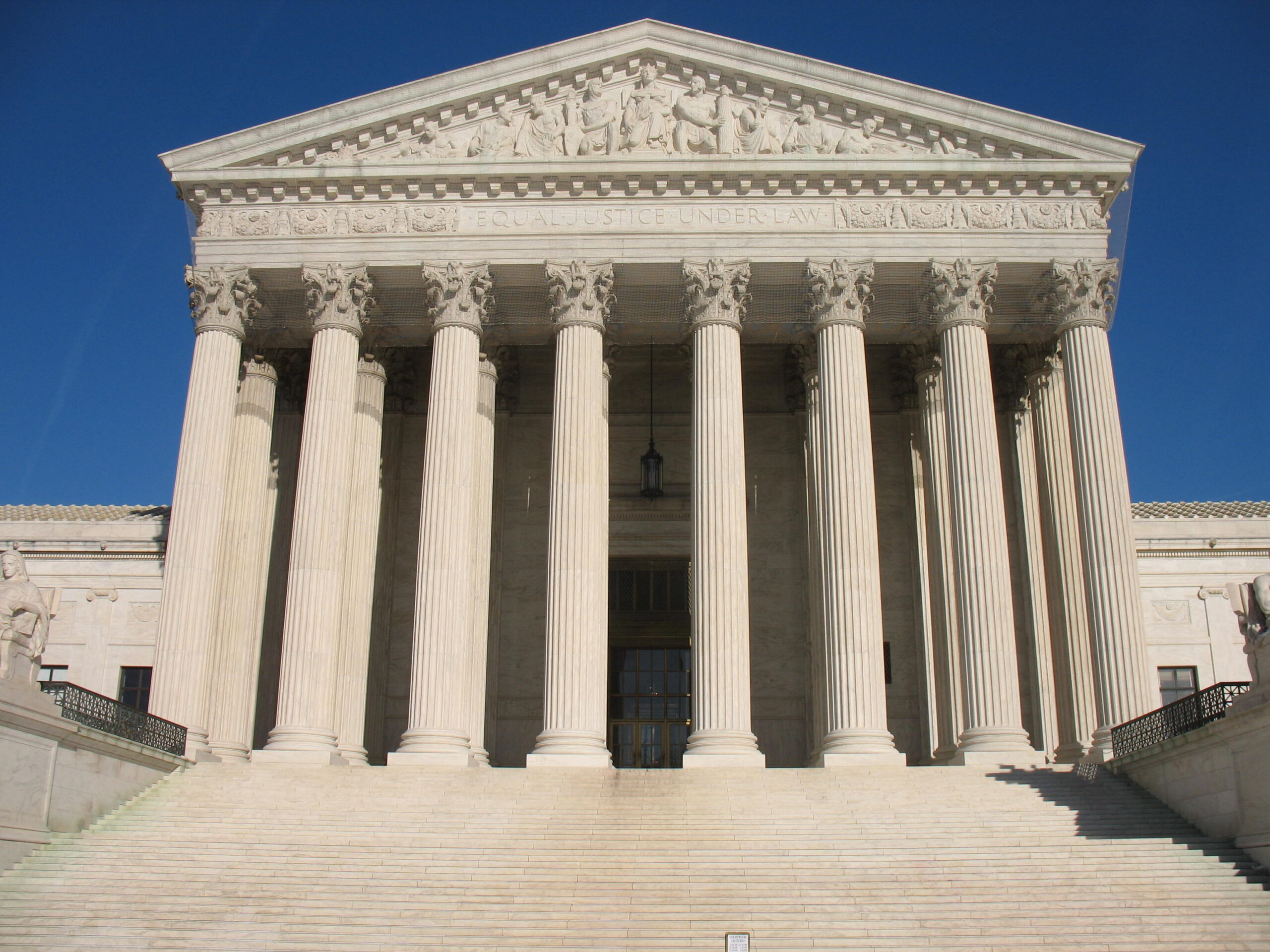
The Supreme Court ruled in favor of Colorado counselor Kaley Chiles’ ability to practice conversion therapy—talk therapy which discourages gender transition or same-sex attraction—with clients under 18 years old. The decision, coming on March 31, 2026, overruled a Colorado law which prohibited counselors from using conversion therapy while allowing them to provide “assistance” in gender transitions.
The Colorado statute defines conversion therapy as “any practice or treatment by a licensee, registrant, or certificate holder that attempts or purports to change an individual’s sexual orientation or gender identity, including efforts to change behaviors or gender expressions or to eliminate or reduce sexual or romantic attraction or feelings toward individuals of the same sex.” The law does not prohibit counselors from providing “acceptance” and “support” for “an individual’s coping, social support, and identity exploration and development . . .”
In their 8-1 majority decision, the Court ruled that the law “regulates speech based on viewpoint.” In the Court’s majority opinion, Justice Neil Gorsuch wrote, “ … Colorado seeks to regulate the content of Ms. Chiles’s speech. When it comes to issues of human sexuality, some of her clients ‘are content with’ their sexual identity and orientation and want help only ‘with social issues [or] family relationships.’ But other clients seek her counsel on how to ‘reduce or eliminate unwanted sexual attractions, change sexual behaviors, or grow in the experience of harmony with [their] bod[ies].’ And in those cases, Colorado regulates how Ms. Chiles may respond.”
The Court added, “The First Amendment stands as a bulwark against any effort to prescribe an orthodoxy of views, reflecting a belief that each American enjoys an inalienable right to speak his mind and a faith in the free marketplace of ideas as the best means for finding truth. Laws like Colorado’s, which suppress speech based on viewpoint, represent an egregious assault on both commitments.”
Justice Ketanji Brown Jackson, the Court’s sole dissenting voice, argued that “… First Amendment principles have far less salience when the speakers are medical professionals and their treatment-related speech is being restricted incidentally to the State’s regulation of the provision of medical care.”
Jackson based her dissent in part on the “danger[s]” of conversion therapy, writing, “Ultimately, scientific evidence supports the conclusion that the anticipated harms from conversion therapy are twofold. First, conversion therapy stigmatizes the patient, telling them that their gender identity or sexual orientation is something to be fixed, rather than accepted. … Second, conversion therapy sets patients up to fail by giving them an unattainable goal. Some patients have described that experience of failure ‘as a significant cause of emotional and spiritual distress and negative self-image.’”
“Even though these kinds of regulations are inherently viewpoint based, in the context of medical care, a State can certainly require the medical professionals it licenses to stand on one side of an issue. … Though these proscriptions certainly promote a viewpoint, in this context, that alone does not suffice to establish a presumptive First Amendment violation,” Jackson added.
Justice Gorsuch countered Jackson’s arguments that Chiles’ speech is subject to medical regulation and therefore exempt from First Amendment protections. He wrote, “This argument echoes Colorado’s claim that it seeks to regulate only conduct, and they falter for similar reasons. If a government could reclassify talk therapy as speech incident to conduct, it might just as easily do the same for speech incident to ‘teaching or protesting.’ … Governments could easily wield all manner of laws regulating some conduct to silence speech they disfavor.”
Sophomore Noah Schoenfelder supported the ruling and emphasized the voluntary nature of conversion therapy. Schoenfelder explained his opinion to the Rover, saying, “If [Ms. Chiles] … had been forcing conversion therapy on someone it would be a different story, [b]ut because the counselor was going along with what her clients asked of her, there is no reason that the state of Colorado should limit what she says.”
Sophomore Kevin Bizily shared his thoughts with the Rover, explaining, “The Court’s ruling reflects the First Amendment’s prohibition against content and viewpoint discrimination. States may regulate how medical professionals practice, but they cannot bar one side of a debate from speaking.”
The Notre Dame College Republicans condemned the “acceptance” and “support” of gender transitions which Colorado’s law allows, telling the Rover, “So called ‘gender-affirming care’—an Orwellian euphemism for mutilation—is evil enough when performed on adults. When performed on children, it is horrifying beyond comprehension.”
The Notre Dame College Democrats declined to comment on the ruling.
Andrew Blake is a sophomore studying political science and PLS. He can be reached at ablake5@nd.edu.