
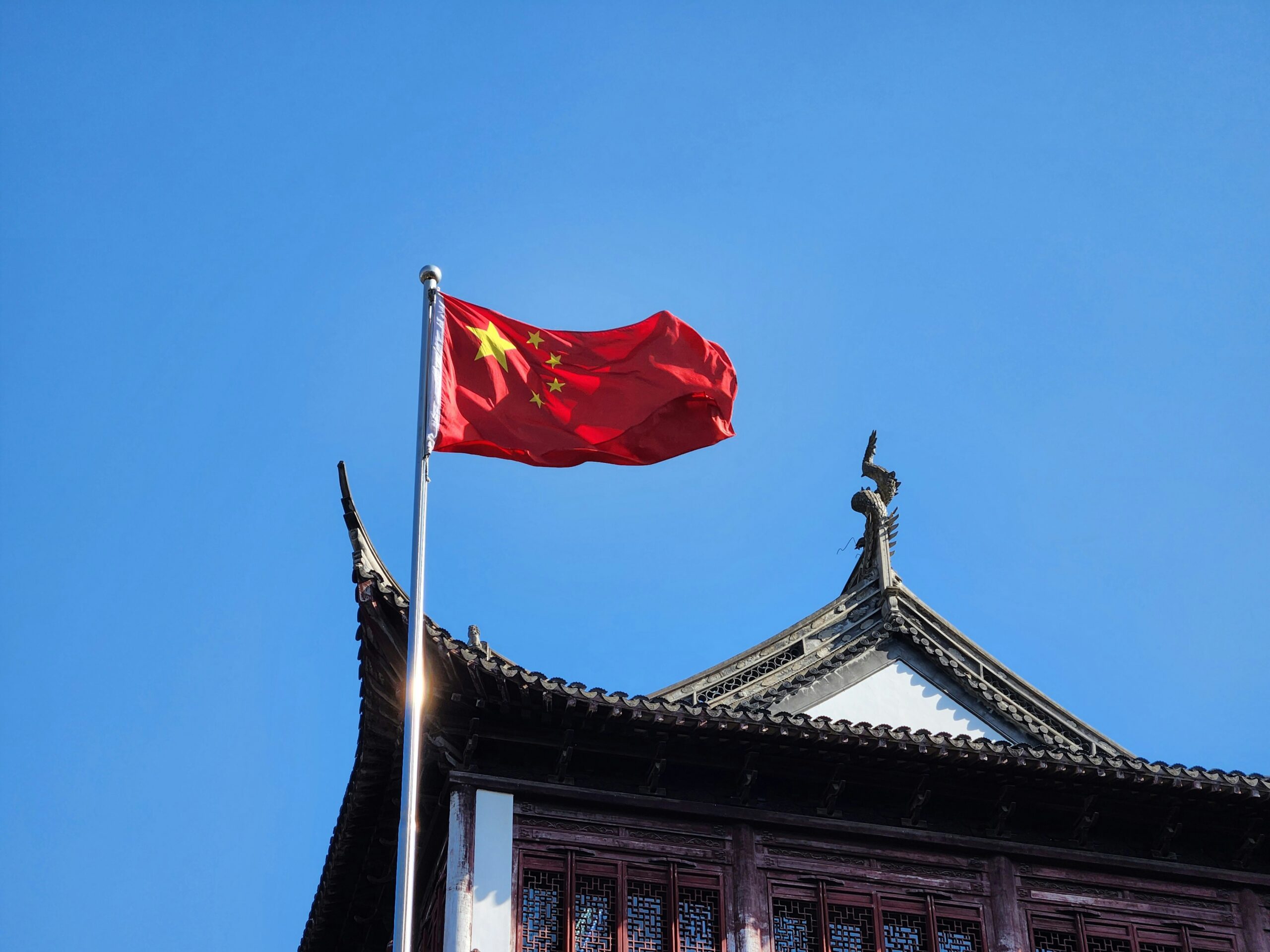
In Beijing, a catechism sign outside a church gate can become a political incident.
One Christmas, the Catholic parish to which I belonged received an unusually large crowd. Amid the crowd of people, a sign advertising its catechism class was pushed beyond the church grounds. The parish was subsequently fined 5,000 renminbi—about 700 dollars—and its pastor was questioned by the authorities.
Nothing on the sign was politically provocative. It simply invited those interested in Catholicism to learn more. Its location was the problem.
Article 33 of the Beijing Regulations on Religious Affairs prohibits evangelization in public places, offices, and commercial premises outside authorized religious venues. Inside the gate, the sign belonged to ordinary parish life. Outside it, the same words constituted unlawful religious propagation.
Such boundaries shape the habits of Chinese Catholics. We learn where Mass may be celebrated, where religious literature may be displayed, and what consequences a public invitation may bring upon a parish and its priests. The Church continues to celebrate the sacraments and instruct catechumens, but it learns caution. Practiced long enough, caution can become silence.
Notre Dame has no comparable gate. According to the university, more than 160 weekday Masses and 40 Sunday Masses are celebrated across campus each week. Notre Dame has more than 50 chapels and over 70 priests, and every undergraduate residence hall has its own chapel. In 2026, Notre Dame reported the largest OCIA cohort in its recorded history: 76 people in the yearlong program, alongside 87 participants in the fall and spring short courses.
Here, students may discuss faith in dorms, dining halls, classrooms, and on the quads. A catechism poster does not need to remain a legally prescribed distance from a chapel door. Inviting a friend to Mass will not bring a rector in for questioning. Yet the first story I heard about Chinese evangelization at Notre Dame began with an email sent by Protestants.
At a gathering of the Matteo Ricci Chinese Catholic Fellowship, a visiting scholar from Peking University told us how the group began. She was a friend of a Chinese Jesuit priest who had once come to Notre Dame as a visiting scholar. According to her account, before his plane had even landed in the United States, he received an email from a Chinese Protestant fellowship in the South Bend area asking whether he needed someone to pick him up.
A low, surprised “Oh” moved through the room.
At a university founded in the Catholic tradition, Chinese Protestants had been the first to find a Chinese Jesuit. According to the visiting scholar, that experience later became one of the reasons the Matteo Ricci Fellowship was established.
I have not independently verified every detail with the priest, so I can present the story only as it was recounted at that gathering. But its central contrast has remained with me. In Beijing, Catholics were punished when a catechism sign crossed the church gate. In South Bend, a Protestant email had crossed a denominational boundary and reached a Catholic priest before he crossed the airport gate.
My first response was hardly ecumenical. I have long been uncomfortable with Protestantism, especially the highly organized methods of evangelization found in some Chinese fellowships. I disliked seeing Protestants reach Chinese students first at one of the world’s most prominent Catholic universities. I readily interpreted their initiative as recruitment and Catholic reserve as spiritual depth.
That judgment was convenient. It spared me from asking whether our reserve was actually passivity. Chinese Protestant fellowships often notice the immediate needs of newcomers. Who will meet them at the airport? Where will they go on Friday evening? Who will remember their names? Who will invite them to a familiar meal while they are still adjusting to life in the United States?
A few professors and students can form a fellowship in a living room. They share food, study Scripture, and reach newcomers through networks of friends. Those who were once welcomed learn to welcome the next person.
Catholics possess churches, sacraments, priests, a liturgical year, and a stable institutional life. We can easily assume that everything essential has already been prepared and that sincere seekers will eventually find us.
But Christ’s command contains a verb: “Go.”
Religious restrictions help explain why Chinese Catholics developed habits of caution. They do not justify our passivity in a free society. Trust in grace does not release us from apostolic responsibility. Matteo Ricci did not remain in Macau waiting for Chinese scholars to find him. He learned Chinese, studied the Confucian classics, adopted the dress of a literatus, and entered the intellectual life of late Ming China. He became known as Xiru—the “Western Confucian.”
The title did not mean that Ricci concealed his Catholic faith. In The True Meaning of the Lord of Heaven, he openly discussed God, the soul, and human nature. He entered another culture with convictions clear enough to invite disagreement and with respect deep enough to sustain dialogue.
That balance reflects a central Catholic understanding of conversion. In the theology of “double agency,” God and the human person do not each contribute half of a conversion. God acts as the primary cause, while the person acts as a genuine secondary cause through intellect and free will. The two forms of agency operate in the same free act without competing on the same plane. Grace precedes, prepares, and elicits the human response; it does not replace it.
The Catechism puts the point plainly: “God’s free initiative demands man’s free response…” It also teaches that grace precedes and calls forth that response while summoning human freedom to cooperate with it.
This doctrine gives Catholics no warrant for waiting idly. We remain responsible for going, speaking, inviting, and accompanying. It does, however, prevent us from claiming another person’s conversion as our achievement. We cannot manufacture faith through social technique. Baptism is not a recruiter’s trophy, a student organization’s growth metric, or proof that one denomination has defeated another.
I saw how quickly religious inquiry could be translated into denominational competition when I discussed Catholic and Protestant teachings with a student who had recently joined a Protestant fellowship. After she posted an image of the Blessed Virgin reading, one friend joked that she was “once again lingering at the door of Catholicism.” A fellowship member reacted with alarm that she might be converting. By the time the story reached an older Catholic student, it had become a report that we had “bullied” a Protestant newcomer.
No organized attack had occurred. A theological conversation had passed through several people and emerged as a struggle over membership.
These were individual reactions, not an official position of the fellowship. Still, they reveal how easily a person disappears behind the question of which group will retain her. What does she believe? What questions is she asking? Does she understand the claims of either tradition? Where does she believe God is leading her? Those questions matter more than who reached her first.
Catholics should learn the Protestant practice of active hospitality. We should meet people at airports, invite them to dinner, hold gatherings in homes, and write to someone who has quietly disappeared. Seventy priests cannot substitute for one timely email. Forty Sunday Masses do not automatically tell a Chinese newcomer which chapel to enter, where to sit, or what to do when others receive Communion.
Our motive matters. If a guest tells us that he will never become Catholic, will we still pick him up, feed him, and remain his friend? Continued friendship shows that we love a person. Interest that vanishes with the prospect of conversion suggests that we wanted a member.
Social warmth can open the door to faith, but it cannot substitute for faith. Admiring a professor, enjoying a weekly dinner, and finding companionship abroad may become occasions of grace. They are not themselves knowledge of Christ. Feeling welcomed is not understanding baptism. Enjoying fellowship is not comprehending the Church.
Catholics and Protestants also need more serious theological dialogue. Our disagreements over Scripture and Tradition, the Eucharist, ordained ministry, Mary, and ecclesial authority are real. Christian unity will not emerge from pretending that these differences are trivial. It requires us to state our beliefs accurately, listen carefully, and allow questions without treating uncertainty as betrayal.
Protestants can remind Catholics to cross the church threshold. Catholics can remind Protestants that conversion cannot be reduced to a decision, a social network, or a moment of emotional certainty. Both communities can examine how belonging sometimes outruns understanding. Both can pray for the unity Christ desired for his disciples.
The freedom to evangelize is not an ordinary feature of campus life to me. I know what can happen when a catechism sign crosses the wrong boundary.
A sign passed through a church gate in Beijing and brought a fine and an official summons. An email passed across a denominational boundary in South Bend and helped inspire a Chinese Catholic fellowship. Both leave Notre Dame’s Catholics with the same question: What will we do with our freedom? We can open the door, prepare the table, explain what we believe, and accompany those who seek. The rest belongs to grace and freedom.
Mo Yeung is a junior at the University of Notre Dame originally from Beijing. He is writing under a pen name.