
Last weekend, every horrid and demonic element of Halloween was on the big screen for Notre Dame students.
The DeBartolo Performing Arts Center, the on-campus source for student entertainment, offered a selection of satanic and pornographic movies indistinguishable from those that might have been offered at any secular university. A horror movie marathon list featured graphic films like “The Burning,” “The Final Girls,” and its sequel “Teenage Sex and Death at Camp Miasma,” brutally violent movies that feature graphic nudity and glorify transgenderism.
And the unsanctioned pro-choice club Irish 4 Reproductive Health celebrated the holy day by distributing packages of flavored condoms and morning-after pills.
Additionally, there was no email sent by the administration to encourage students to consider the deeper message of Hallows’ Eve, or to celebrate in a special way the Feast of All Saints Day.
Every October, debates between Catholics resurface about the redeemability of Halloween and its proper celebration. Is it right to dress up and decorate? Should we watch horror movies? Can we trick-or-treat?
While there are many evil and truly demonic elements of our culture’s observance of the holiday that should be condemned, it strikes me that the tragedy of Halloween is not so much its secularization as it is our forgetfulness of the day that follows.
A Catholic “reclamation” of Halloween alone is an insufficient answer to modern man’s great struggle with his finitude, a struggle that is all too clear in the gruesome horror with which Halloween presents death. A clear presentation of our final goal is needed, and nothing does this more beautifully than All Saints Day.
The first account of this feast—now a Holy Day of Obligation in the Catholic Church—dates back to Pope Boniface IV, who dedicated the Pantheon to the Virgin Mary and all martyrs in 609 A.D. Pope Gregory III later expanded the day to include all saints in 735 A.D.
On All Hallows’ Eve, the remembrance of death was itself supernaturally oriented towards the beginning of new life. All traces of this anticipatory nature have disappeared, however, from our modern observance of Halloween. Our culture’s revelry in the macabre and ghastly has no end beyond its own entertainment. In an ironic way, the debauchery of October 31 has encroached on the following two holy days the Church observes. This is the true tragedy of Halloween.
A beautiful aspect of All Saints Day is that it recognizes, as its name makes clear, all saints—known and unknown—who have reached Heaven. It is the feast for the many men and women who stand beside the figures we see in the stained glass windows of our churches. These “hidden” saints may not have a feast in the liturgical calendar of the Church, but they are in Heaven nonetheless and serve as models of the Christian life.
All Saints Day is a feast that should inspire the lay Catholic, whether it be the Catholic parents who take their children trick-or-treating or the Catholic college student going to his costume party. Lay Catholics have particular cause to celebrate the deeper meaning of the days following Halloween, knowing that the Church intentionally reminds them of their divine calling. Wherever or whoever he may be, the baptized Christian is given a particular vocation to holiness to which he is invited to say “Yes!”, just as every man and woman in Heaven did.
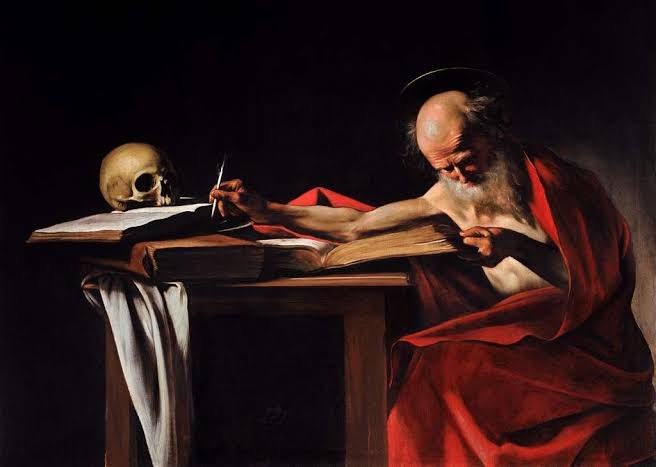
I mention Notre Dame’s wasted opportunities of formation not because I shirk from the death that Halloween puts (albeit in a warped way) at the front and center. Memento mori—Latin for “remember you must die”—is a phrase that has echoed through the centuries of the Church and stood at the center of many saints’ spiritual traditions. I lament instead the way in which Catholics, and my university in particular, have failed to reintroduce the hope of All Saints Day to a broken culture.
As an educator, Our Lady’s University is entrusted with the souls of her students. Instead of delivering a message focused on each student’s unique call to holiness—a holiness that can and should be lived out on campus—Notre Dame was complacent in letting her students celebrate with profoundly misguided debauchery and immodesty.
The crazed hold that the night of October 31 has over the American mind has led Catholics to forget the anticipatory nature of the holiday. Halloween is a vigil, and its true purpose is to point man towards his ultimate destination by reminding him of his mortality. Halloween—more properly called Hallows’ Eve—is meant to prepare us for the greater feast of All Saints Day.
In the face of the horrific, ghoulish, and depraved observance of Halloween that our society has presented as “normal,” Catholics are called to reorient their celebrations towards the feasts of the following days, which remind us of the hallowed dead and the “cloud of witnesses” waiting to greet us in Paradise.
Lucy Spence Trotter is a senior majoring in piano performance and the Program of Liberal Studies, with a minor in philosophy. Reach her at lspence@nd.edu.