
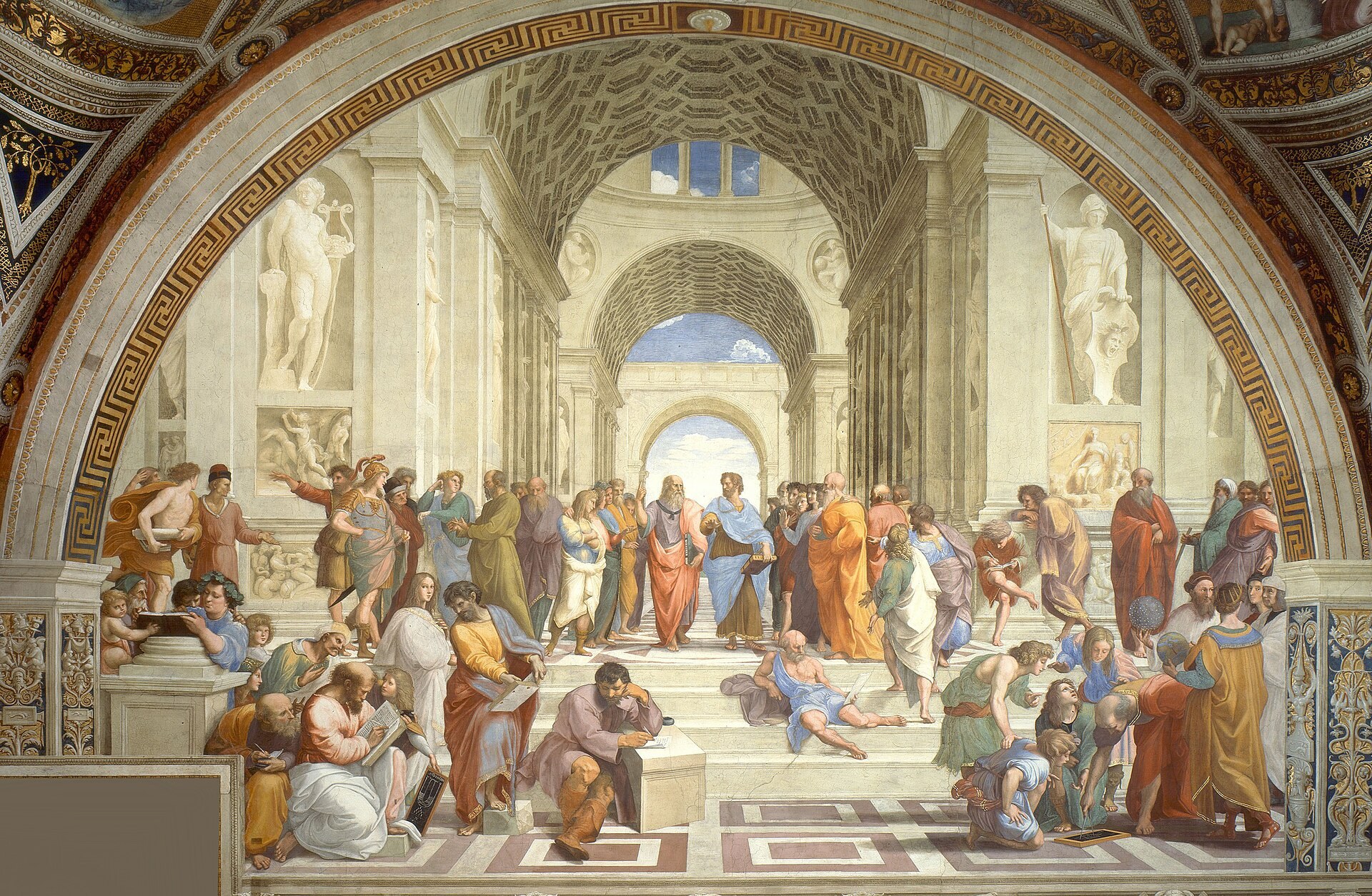
Among college students, use of AI for help completing coursework has become the norm. According to a 2025 survey from Chegg, 80 percent of college students use AI to “support their university studies.” At Notre Dame, one particular use is concerning professors: the use of AI by students in philosophy and theology classes. The Rover interviewed students and professors in these departments to gain their perspective on the issue.
Among students and professors, AI’s inability to think for itself is a primary point of concern when it comes to its usage in theology and philosophy classes. Professor of Theology John Cavadini, for example, described AI as incapable of the kind of inquiry theology requires. In an email interview with the Rover, he explained, “[The] mind is not just intellect … [i]t’s memory, intellect, and will. Thinking involves the whole person. It’s a whole body sport. It involves my willing, my loving, my desiring, my detesting. It involves my memory, meaning, the totality of my identity as embodied spirit.”
“[There is] a very thin line between asking for information and renting out one’s mind to a machine that [does not have one],” Cavadini concluded.
Visiting Associate Professor of Theology Father Michael Heintz expressed a similar sentiment, arguing that while “AI can reduce or eliminate the ‘leg work’ that real scholarship demands,” the ability to find sources and “[develop] a principle of discernment among them” is integral to developing expertise in any research-based field.
Thomistic Studies professor Therese Cory noted some benefits of AI, recognizing that it can “provide pretty reliable bullet point summaries of major philosophical and theological texts on which there is already a lot of existing data.”
However, Cory ultimately maintained an attitude of caution toward AI, explaining, “Every time a journal sends me an article for review, I now have to wonder how much of it might have been AI generated versus written by a real person,” she explained. “I find this disturbing, because philosophy is a conversation among minds seeking the truth. I want to know if I’m in a conversation with a real person or not.”
Not all professors are strongly opposed to the use of AI in the classroom, however. Philosophy professor Jc Beall finds AI to be a useful tool in this setting. Beall praised AI’s ability to “make a lot of necessary research tasks much more efficient.”
Beall explained that he “support[s] using any tools that serve to facilitate the search for truth, at least on one condition. The one condition: the tools must be used by those who are already well-trained, conscientious, highly intelligent seekers of truth or creators of beauty.”
Joris Geldhof, Professor of Theology, expressed optimism that AI could be a useful tool in the field of liturgical studies, where AI has revolutionized the analysis and translation of many large texts that would otherwise have taken years of work by very specific scholars and specialists.
However, Geldhof noted that the expansion of AI “comes with a huge societal cost and a huge impact on the environment.” He explained,“[AI] is another technological revolution that needs to be looked at in the context of a broader evolution.”
Theology students have also grappled with the impacts of AI on their studies. Junior theology and Program of Liberal Studies student Rylen Lastrella expressed strong opposition in a statement to the Rover, explaining, “The inclusion of AI in theology/philosophy classes is primarily detrimental and has very little benefit to add in fields that are primarily led and reinforced by individual, deep thinking.”
“I fear that with AI use becoming more common in academics, the humanities especially, we run the risk of undermining basic critical thinking, practically offloading human expression to a non-human,” he concluded.
Lastrella is not alone in his criticism of AI tools. Junior Jacob Mills concurred, writing, “While AI can have great use as a search tool, capable of searching and collecting many sources, I do not think it has any substantial use in the real work of philosophy or theology … [since] it is inherently incapable of innovative thought.”
Lizzie Canty is a freshman from Long Island, New York, who is studying architecture. When she’s not doomscrolling or Spotify nichemaxxing, she can be reached at ecanty@nd.edu.