
“Have I now become your enemy by telling you the truth?” – Galatians 4:16
Two op-eds recently published by the Observer questioned the integrity of the Rover’s journalistic practices, highlighting our latest investigation into Professor Pamela Butler. In her article, Ms. Lekeufack calls the Rover’s journalism “dangerous,” “unreliable,” and full of “scare tactics.”
While I take issue with many of Ms. Lekeufack’s points, including her claim that our protection of anonymity for poll respondents allows for “casual racism,” I applaud her for getting one thing right.
The Irish Rover is biased.
This is not news. The Rover’s bias has always been publicly displayed—it’s even on our website! As Ms. Lekeufack notes, our mission statement clearly states, “Established in 2003, the Irish Rover remains an independent, non-profit, student publication devoted to preserving the Catholic identity of Notre Dame.” Two pillars of our constitution, also available on the website, are to “defend the Faith and honorable traditions of this great university” and to “articulate conservative principles.”
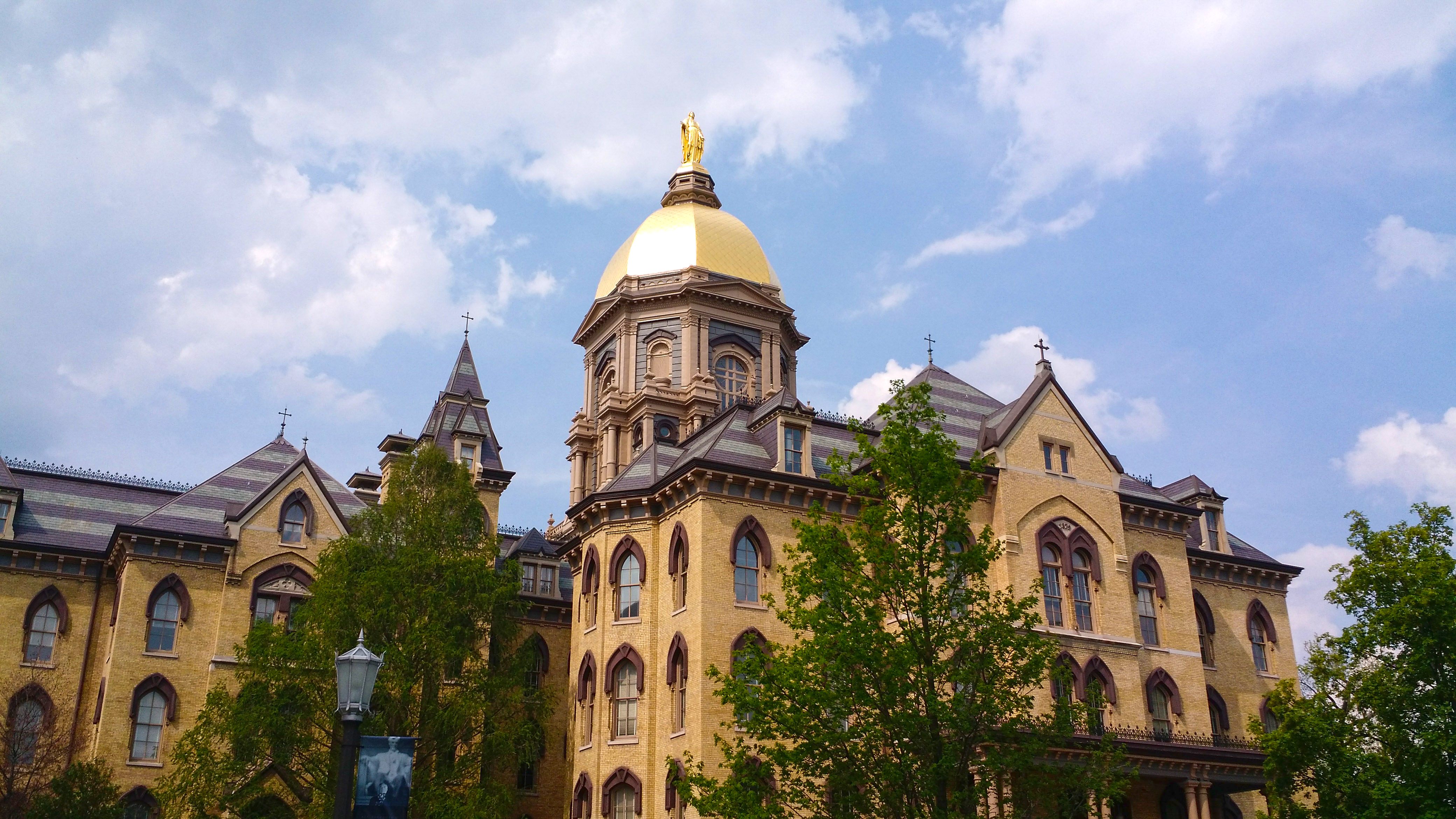
The Rover is dedicated to defending the Catholic faith, particularly in its expression at Notre Dame. Our motto says it best: “It behooves a watchdog to bark.” If a commitment to Catholicism makes us biased, then we have another offender to add to Ms. Lekeufack’s list: the University of Notre Dame.
By identifying as a Catholic university, Notre Dame directly submits itself to the Church’s teachings. Notre Dame is a self-proclaimed “Catholic academic community … dedicated to the pursuit and sharing of truth for its own sake.” Thankfully for Notre Dame, and Catholics everywhere, we may easily access the truth. The Church gives us the truth in Her teachings, which Notre Dame is called to follow.
At its core, Catholicism is a claim about the truth. It is an assertion—a bold one—that Jesus Christ, fully God and fully man, died and rose again in order to save us. But the Catholic claim does not stop there. It asserts that the teachings of Christ, as proclaimed by the Catholic Church, are true, indispensable, and necessary for salvation.
These teachings are articulated through the Magisterium, Church Tradition, and Revelation, as many freshmen in their first theology courses can tell you. The Catechism in particular is a faithful distillation of the Church’s teachings on matters of faith and morals—including on abortion, contraception, and sex.
In his op-ed, Mr. Lynn claims that the Rover uses Catholicism as a “battering ram” to express our personal beliefs. But the belief that contraception and abortion are wrong is not simply personal: It is a truth espoused by the Catholic Church, and therefore, by the University of Notre Dame.
The Catechism speaks in no uncertain terms: Every action that aims to eliminate procreation during sex is intrinsically evil (#2370), and abortion is a moral evil (#2271). If someone is facilitating such evils on our campus unnoticed, then we need a watchdog to bark. Our investigation into Professor Butler did not “vilify” her or the members of I4RH; it shined a light on a faculty member who used university resources to directly contradict that university’s mission.
Following his criticisms of our investigation, Mr. Lynn wrote, “I do not believe that I can definitively state what exactly is and what is not contrary to the Catholic identity, but I find themes of exclusion and divisiveness difficult to articulate alongside the charters of the Faith.” As shown above, the work of I4RH and Professor Butler is clearly contrary to Catholicism and cannot be tolerated by a Catholic university. To allow such activities to continue on campus, using the same buildings that students pay for, is to directly renege on the promises of Notre Dame’s mission statement.
The purpose of the Rover is not to divide—it is to unite; to invite all of Notre Dame’s students, faculty, and staff to participate fully in the university’s Catholic mission; to integrate Notre Dame’s campus with the global Catholic Church. Ultimately, the mission of the Rover is to help Notre Dame live up to her promises, to her students and to the world.
In achieving our mission, we adhere to strict standards of journalistic integrity. All articles are rigorously reviewed by our editorial team, including opinion pieces. We try to include comments from both sides of each story—contrary to Mr. Lynn and Ms. Lekeufack’s claims, we invited both pro-life and pro-abortion advocates, including Professor Butler, to comment on the article before publication. We rely on reputable sources and reach out to every student, faculty, and staff member we investigate for interviews.
As we tell all of our staff writers, the Rover’s Catholic mission is primarily expressed through the articles we choose to publish, not how we write them. We do not “attack” people but rather bring their actions to light, using factual analysis and objective reporting. In doing so, we hope to inspire others, including Notre Dame’s administration, to more closely scrutinize instances of moral evil on campus.
The Rover is far from perfect. Like any student publication, we may allow a poorly-worded sentence or two to slip through the editorial cracks. But our bias is not a discredit to our journalism, as Ms. Lekeufack and Mr. Lynn suggest. A watchdog barks at every intruder to the home, just as we faithfully report on every deviance from the Catholic mission at Notre Dame.
The Irish Rover has a bias. So does our great university. We are biased on behalf of the truths of the Catholic faith.
Haley Garecht is a senior studying political science, constitutional studies, and Irish studies. Please contact her at hgarecht@nd.edu.
Photo Credit: Image by the Irish Rover
Subscribe to the Irish Rover here.
Donate to the Irish Rover here.