
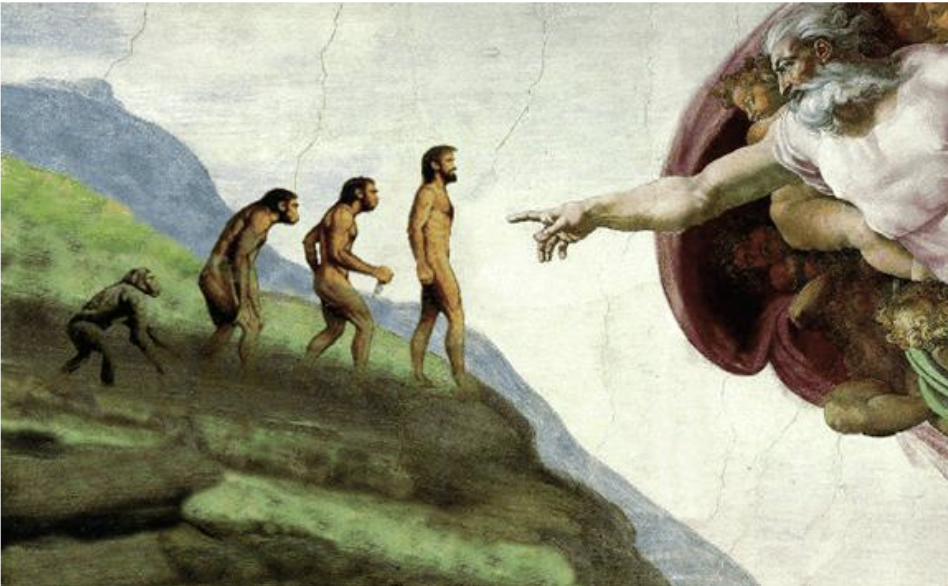
As part of its mission as a global Catholic research university, Notre Dame recently hosted 30 U.S. bishops and 30 archdiocesan and diocesan educational leaders for a conference titled “The Relation Between Science and Faith as a Pastoral Issue in an Age of Disaffiliation.”
Over the course of three days, attendees heard prominent Catholic scientists speak on the intersection of faith and reason and learned strategies for educating the laity on similar topics within their own communities. The conference was sponsored by the McGrath Institute for Church Life’s Science and Religion Initiative and the United States Conference of Catholic Bishops (USCCB) Committee on Doctrine, in association with the Society of Catholic Scientists.
John Cavadini, Professor of Theology and Director of the McGrath Institute for Church Life, sat down with the Rover to provide insight on the conference’s efforts to support bishops and diocesan leaders in their pastoral needs.
“For this conference,” Cavadini explained, “we invited the bishops to bring with them … people who work with them in their diocese in education or catechesis. The bishops who came with their teams were able to create a team vision based on ideas from the conference … it wasn’t just theoretical; it was also practical.”
The goal, Cavadini continued, was to “train trainers,” making the “resources of the university user-friendly for building up the Church in its various local settings.”
The conference also established relationships between bishops and scientists. As Cavadini noted, “We made links between scientists who are members of the Society of Catholic Scientists and bishops so that they can pursue personal friendships and mutual projects.”
Among the scientists present were paleoanthropologist Dr. Kieran McNulty from the University of Minnesota, astronomer Dr. Karin Öberg from Harvard University, and Br. Guy Consolmagno, Director Emeritus of the Vatican Observatory and President of the Vatican Observatory Foundation. As Dr. Chris Baglow, Academic Director of the Science and Religion Initiative and Professor of the Practice of Theology at Notre Dame, told the Rover, “They themselves are at the forefront of their fields, and yet at the same time, they are devout believers who love God and love the Church and see … a real and compelling symbiosis between those two.”
Multiple interviewees suggested that interdisciplinary education and connection are especially crucial today, when the perceived gap between science and religion seems to be rapidly widening. Baglow explained, “There tends to be—and I see this among my students at Notre Dame quite often—a perception that you have to believe one more than the other, or accept one and not the other.”
Baglow attributed today’s clashes between faith and reason in part to rising rates of scientific literacy, saying, “As scientific literacy increases, it’s only natural that people will begin to ask, ‘How does this all relate to ultimate questions of meaning?’”
Heather Foucault-Camm, Program Director of the Science and Religion Initiative and Scholar Associate of the Society of Catholic Scientists, noted that people have come to rely more on science than on religion as technology has advanced. She told the Rover, “There’s this totalizing social imaginary that science can answer every question and that technology has a solution to every problem.”
Yet, as the conference articulated, both science and religion are necessary for a holistic understanding of the world. Citing the unique contributions of each, Baglow explained, “Science asks ‘how’ questions about the processes by which the universe develops … at all the various levels,” while “religion addresses not ‘how’ questions but ‘why’ questions.” Giving an example, Baglow continued, “Why does the universe exist at all? There’s no process that can answer that question.” Thus, Baglow pointed out, “The two are complementary perspectives, not competitive ones.”
Foucault-Camm echoed these sentiments and added, “For me, … the compatibility between science and religion … gives me that full vision to see creation to the extent that my flawed, fallen mind can, … inclusive of the insights from science and the gift of meaning and purpose that is afforded by faith.” This holistic understanding of the world is why Baglow described the scientific education afforded by the conference as essential, saying, “Theology can’t reflect on something it doesn’t know.”
Notre Dame graduate theology student Emily Fasteson, who serves as an assistant for the Science and Religion Initiative, described her perspective on the compatibility of faith and science to the Rover. Fasteson, who has degrees in both math and theology, told the Rover that faith influences the way she teaches math.
She explained, “My telos as a teacher—particularly a teacher of middle grades (6–8)—is to inculcate in my students a sense of wonder at creation, discern their role in it, and recognize how God is working in their lives.” Fasteson added that mathematical skills like logic and problem-solving force students to ask themselves, “How do I as an individual human being live in that ordered world which is ultimately pointing to God?”
Baglow argued that holding the bishops’ conference at Notre Dame was fitting, as the relationship between faith and science is written into the university’s very identity as a leading Catholic research institution. As Baglow pointed out, “People at Notre Dame … have been asking questions of how the ‘how’ and the ‘why’ come together since its inception.” He explained that the university’s dedication to scientific research as well as its “robust Catholic identity” make it “an ideal place for people to begin to speculate about the relationship and also to proclaim the harmony between the two in ways that are illuminated by both.”
Cavadini illustrated the significance of McGrath’s role in providing dialogue-based education at a time of perceived conflict between science and faith, saying, “The Church is supposed to accompany people and to help them have hope.” Foucault-Camm, who delivered the closing talk in collaboration with Baglow, reflected, “What was beautiful about the entire experience … was sitting in that room and watching those men and women learn together. Watching the Church learn and respond to the needs of the people was just such a beautiful experience to observe.”
Noirin Dempsey is a freshman from Lake Geneva, Wisconsin currently living in McGlinn Hall. When she’s not studying political science and journalism, she can usually be found playing piano in the McGlinn chapel, wandering the snack aisle at Trader Joe’s, or watching the Chicago Bears lose. You can contact Noirin at ndempsey@nd.edu.