
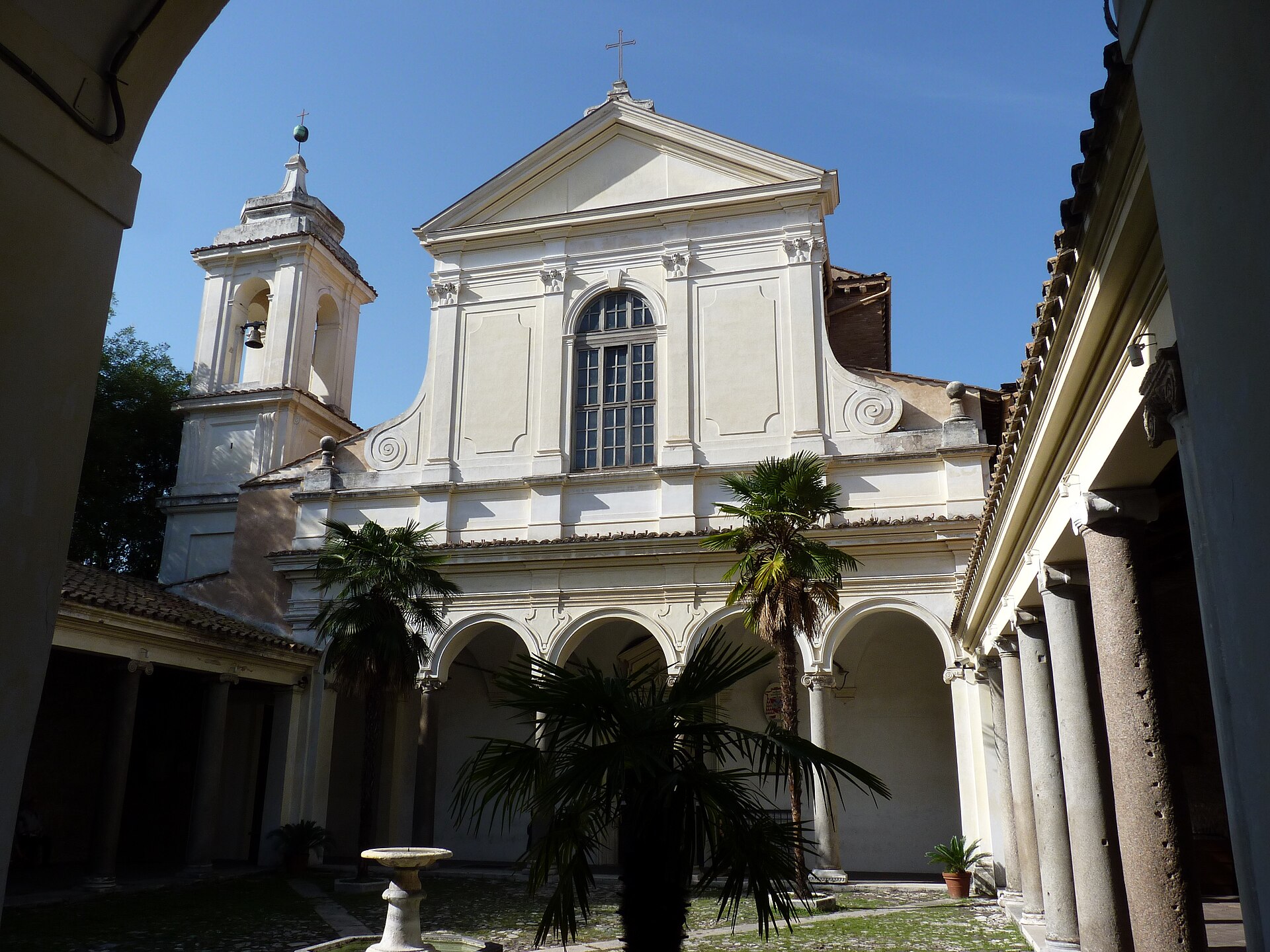
A new initiative beginning in the fall of 2026 will give students of the University of Notre Dame in Rome an opportunity to participate in efforts to restore the Basilica of San Clemente through internships with the San Clemente Project. The project is being undertaken by the Hortus Foundation, a non-profit organization dedicated to the preservation and restoration of “timeless works of Catholic cultural heritage.”
Located near the Notre Dame Rome building, San Clemente is named after Pope Saint Clement I, the Catholic Church’s third pope. Through excavation efforts in 1857, the Prior of San Clemente discovered two layers of buildings beneath the present basilica.
The layered archaeological structure of San Clemente has its roots in the history of the area. After the Great Fire of Rome in the first century rendered buildings in the area unlivable, dirt layered over time and became the foundation for two first-century buildings. When these buildings were abandoned, a house was built on top, and then finally, around the year 400 A.D., the house was made into the first Basilica of San Clemente.
Joseph Sciortino, a fourth-year architecture student, shared his experience visiting the basilica while studying abroad in Rome. Sciortino told the Rover, “It is located in the same neighborhood as the villa, so I was able to go to daily Mass there and became intimately familiar with the church.” Sciortino also stressed the importance of San Clemente in the history of Rome, noting that the many unearthed layers reveal the story of Rome’s lengthy history.
By the year 1100 A.D., the church building was abandoned and filled with rubble when the rising street level compelled the construction of a taller church. This newer building, run by the Irish Dominicans, is the current Basilica of San Clemente.
The Hortus Foundation’s project focuses on the restoration of this twelfth century church, which bears the damage of cracked paint, decayed frescoes, and ceiling disrepair. The total estimated time of reconstruction efforts is approximately two years, which the basilica estimates will include “major restoration work” and scaffolding until mid-2027.
Meredith Glunz, also a fourth-year architecture student who studied in Rome, told the Rover, “It was interesting to see the progress of the restorations going on this past year. Different sections of the church would appear from beneath scaffolding, revealing incredible craftsmanship that was thoughtfully and beautifully restored.”
Glunz continued, “I think that this collaboration is a gift to the Notre Dame community, for both the students participating in the internships and for the future generations who get to experience the beauty of the Catholic faith through the architecture and history captured and preserved in this space.”
Notre Dame students will work hands-on with the project’s three restoration phases. The first consists of cleaning, repairing, and modernizing several portions of the twelfth century church. The second involves excavating and preserving many elements within the fourth century church below the current basilica. The third phase will introduce a museum experience.
Chris Winter, a 2026 graduate, also studied abroad in Rome as a student. He echoed the same sentiments as Sciortino: “The Basilica of San Clemente is one of the most impressive archaeological, artistic, and religious marvels in a city that is full of them. Notre Dame students now have access to an incredible opportunity in being able to contribute directly to the restoration and preservation of this great monument of our Catholic heritage.”
Winter also urged future students to consider this program as “it will surely be the experience of a lifetime.”
Rylen Lastrella is a junior studying in the Program of Liberal Studies and theology. His room has become quite the archaeological site of its own. Like the Basilica of San Clemente, it contains layer upon layer of books because apparently there is such a thing as too much reading and too little shelf space. If you want to aid in the acquisition of a suitable bookshelf for his room, he may be reached at rlastrel@nd.edu.