
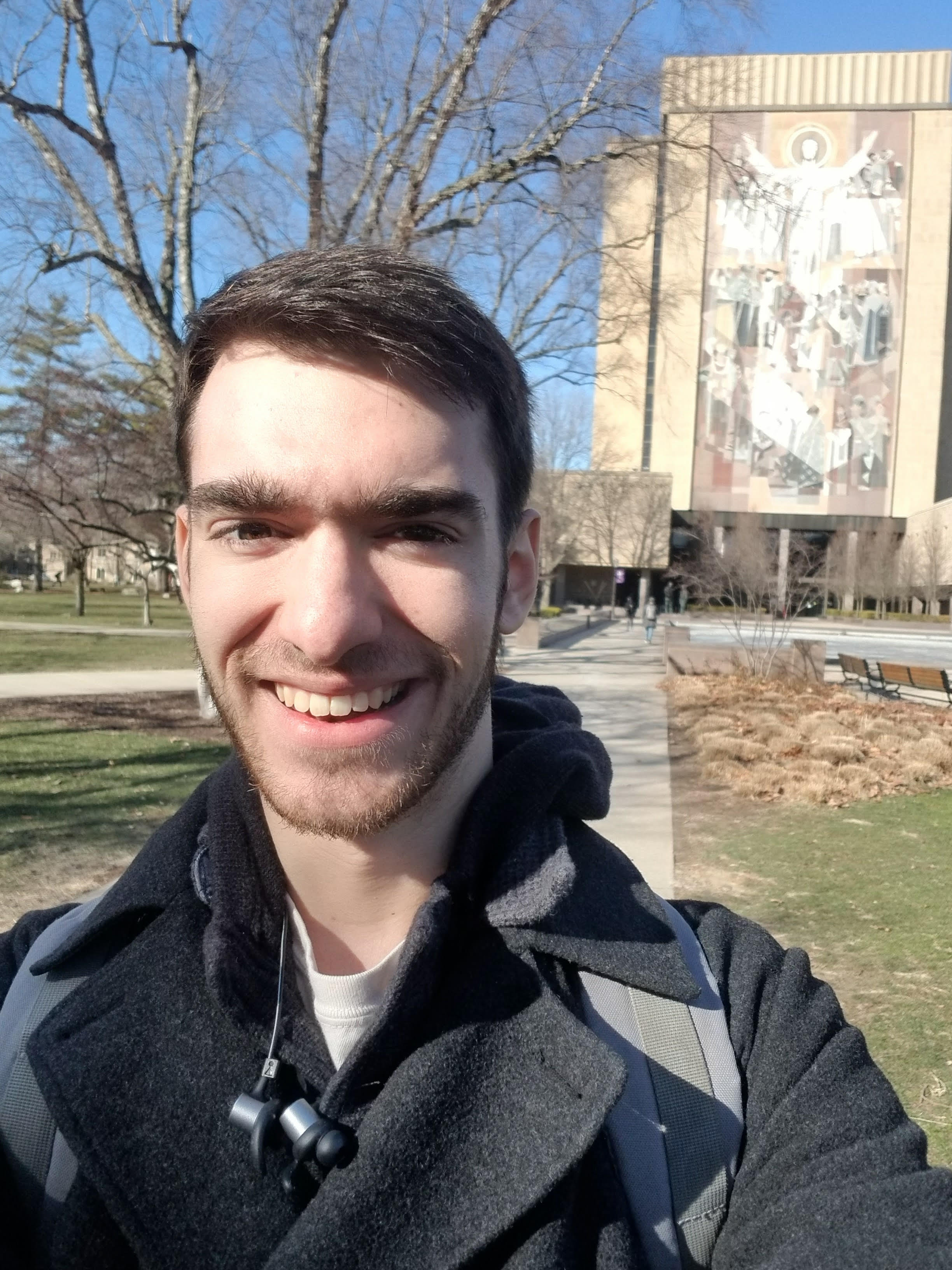
The 2026 midterm elections are fast approaching, and citizens around the country are beginning to register to vote and cast their ballots. Anticipation for the midterms is also taking place at Notre Dame, as the student government promotes voter registration and the Democracy Initiative of Notre Dame recently held a panel discussing political trends surrounding the midterms.
However, Notre Dame’s voter turnout turns out to be lacking. Only 26.6 percent of Notre Dame students voted in 2022, which was lower than Notre Dame’s 2018 turnout and the national average of 31.3 percent. According to the Panetta Institute of Public Policy, 58 percent of college students are concerned about American democracy. Even though Notre Dame students are showing signs of lower electoral participation, this year’s midterms are full of important elections for Notre Dame across the country that could shape both Indiana and Washington.
Indiana’s statewide races are usually resoundingly red, but 2026 brings legitimate challenges from Democrats. The only statewide race in Indiana is the election for Secretary of State—the official who oversees elections and charters businesses in Indiana.
The election drew attention during the nomination process, when incumbent Republican Diego Morales’ bid failed due to a series of personal controversies—including accusations of sexual assault, corruption, and embellishing his military record. Subsequently, party leaders withdrew support from Morales and nominated Max Engling, a staffer who previously worked for Senator Jim Banks and former Speaker Kevin McCarthy.
On the Democratic side, Beau Bayh swiftly picked up the nomination. Bayh, the son of former Indiana Senator Evan Bayh, has collected 2.3 million dollars in donations. His campaign has emphasized his military experience while highlighting Morales’ corruption.
In addition to the two major candidates, former Indianapolis mayor Greg Ballard is running for the seat as an independent. He has raised more money in the last three months than Bayh or Engling respectively. Libertarian Lauri Shillings is also in the race, adding further electoral and ideological pressure on the right-wing candidates. Though Bayh and Englings are far ahead in the polls, these two candidates could offset voters from Engling, further endangering the seat for Republicans.
Nevertheless, Notre Dame voters needn’t look statewide to find important races: Professor James O’Brien of the Mendoza College of Business won a contested Republican primary to run for St. Joseph County Council, District C, which encompasses Notre Dame. An alumnus of Notre Dame, O’Brien stepped down from the County Council in 2018 to focus on his family but revealed in a statement to the Rover that he wants to serve again to lower taxes and halt the construction of more data centers. He says his accounting background, experience in the role, and close ties to the community make him the best suited candidate.
Along with city council elections, State House District 8, which includes St. Joseph’s county, is holding an election as well. Though Rep. Ryan Dvorak (D-8) is favored, it is the first time he is being challenged in an election since 2020. In terms of congressional races, Indiana’s 2nd District, which includes Notre Dame, is a Republican stronghold and will likely reelect Rep. Rudy Yakym, another Notre Dame graduate.
Notre Dame’s influence in the midterms spreads far beyond the Hoosier state. There are currently seven members of Congress who graduated from Notre Dame, and all seven are running for reelection in districts deemed safe or likely by the Cook Political Report. In an interview with the Rover, O’Brien argued that alumni like himself have an advantage when working in Congress, noting, “Notre Dame graduates take away an appreciation of giving back and serving.”
Of the seven, Rep. Warren Davidson (R-OH) is the most nationally recognized, making headlines for voting against hostilities in Iran. Rep. Mike Flood (R-NE) holds an important position in the GOP as chair of the Main Street Caucus, a group of Republicans focusing on economic growth.
Rep. Jeff Hurd (R-CO) is the only ND alumnus running in a “likely” district and is currently chair of the Subcommittee of Indian and Insular Affairs, while Rep. Mike Kelly (R-PA) also holds an important seat as chairman of the Subcommittee on Taxes, with his focus squarely on lowering taxes for everyday Americans.
Kelly was also a member of the Notre Dame football team. Rep. Pat Fallon (R-TX), too, played on the team; he was a wide receiver for the 1988 championship team. Fallon recently returned to campus with fellow alumnus Rep. Brendan Boyle (D-PA) for a dialogue hosted by the ND Political Union focused on finding common ground.
The discussion covered multiple topics, especially the economy, with Boyle highlighting Democrats’ priority to remove tariffs and pressure President Trump to end the war in Iran. Fallon, however, noted the trade deficit’s effect on prices, stating this would be a priority for Republicans in the next Congress.
The final incumbent, Rep. Rudy Yakym (R-IN), is in a unique position competing against Jamie Decio, a Democrat who also graduated from Notre Dame. This matchup is the first time two Notre Dame alumni are running against each other.
Along with Decio, two other alumni, Melat Kiros and Maria Jokic, are running for office as Democrats. While Jokic is expected to lose in Ohio’s 14th district, Kiros is the favorite in Colorado’s 1st after drawing national headlines for defeating 15-term Rep. Diana Degetter with a democratic socialist platform.
Professor O’Brien argued voters should not be put off by these expectations, saying, “If we don’t vote, the folks that show up will have the bigger voice.” Across the country, voters are hearing this message and reshaping America’s political landscape.
Many Democratic voters have swept aside political giants for a younger, progressive generation of candidates. Red states like Alaska, Ohio, Texas, and Kansas have suddenly become intense battleground states, while Republican senate candidates are polling shockingly well in bluer states like Minnesota and New Hampshire. Look no further than Indiana, where the state could elect its first Democrat to statewide office since 2012, and voters mobilized to elect multiple Trump-endorsed candidates in primaries for the State House. The 2026 midterm elections are about to make history, and Notre Dame is set to play its part in Indiana and beyond.
Tristan Buttimer is a freshman political science major. Contact him at tbuttime@nd.edu.