
New plan attempts to balance finances, stewardship
“Sustainability” has become a buzzword in both science and religion, and Notre Dame’s release of a new sustainability strategy last month testifies to the trend toward more conscientious care for creation.
Alarming scientific evidence on climate change and environmental degradation and the urging of Pope Francis have prompted the university’s administration to assert a commitment to environmental stewardship, but their actions have roused criticism from some within the Notre Dame community.
The plan includes recommendations for improved sustainability in six main areas: 1) Energy and Emissions; 2) Water; 3) Building and Construction; 4) Waste; 5) Procurement, Licensing, and Food Sources; and 6) Education, Research, and Community Outreach. Each recommendation states a long-term goal as well as a five year action plan, some of which are quantitative and others more qualitative.
For example, one qualitative goal is to “decrease overall water use across campus” in the long-term by increasing green roofs and rain gardens on campus. In contrast, another five year action plan under Building and Construction calls for all new and “substantially renovated” buildings to meet LEED Silver Certification at minimum.
Improvements in many of the stated areas translate directly to savings, whereas others require greater financial investment. For instance, the goal to “Increase energy conservation and efficiency” means reducing consumption across campus and lower energy bills. On the other hand, the goal to “Increase sustainability of food sources” includes plans to purchase more local and ethically-sensitive food for campus dining services, which has a greater moral motivation than financial.
The plan cites “the teachings of our Catholic tradition and mission” in addition to Pope Francis’ call to care for creation as the primary reasons for improving sustainability. However, the document also lists three guiding principles upon which the strategy was formed: respect for the human condition, respect for the conservation of natural resources, and economic viability.
The concern to “consider the economic impacts of our actions to ensure the university’s financial health for decades to come” has drawn criticism from some groups, including Fossil Free ND, Notre Dame’s student-led fossil fuel divestment movement.
“While containing admirable long-term goals, the strategy is hardly ‘comprehensive,’” said the group in a press release responding to the sustainability plan. The response lists several shortcomings of the sustainability strategy, including the use of fossil fuels in the on-campus power plant and investment in fossil fuel companies.
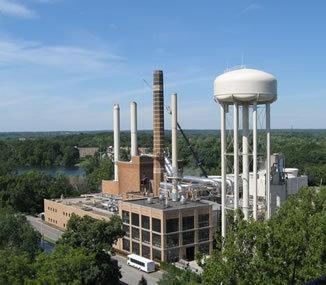
Part of the energy plan recommends building infrastructure to replace coal with natural gas in the power plant. Natural gas has lower carbon dioxide emissions, but burning it produces methane, which is more efficient in trapping heat in the atmosphere than carbon dioxide. In addition, the long-term goal to reduce carbon dioxide emissions per square foot still leaves room for a significant carbon footprint as campus expands.
Investment of the endowment is not an issue dealt with by the current plan. About $400 million of the university’s endowment is currently invested in fossil fuel companies, but the current plan makes no mention of reevaluating this investment.
Fossil Free ND also refers to research that indicates that 100 percent of energy needs could be met with renewables by 2050 to suggest that the university’s goal of 25 percent renewable energy by the same year falls short of what is necessary and attainable.
Perhaps the current strategy lacks ambition, according to critics, but the committee’s effort to establish attainable goals is clear. Furthermore, the strategy “is neither final nor complete, and it will continue to evolve along with the university’s lived commitment to sustainability.” Small working groups will have the power to refine and improve the five-year plans, and the standing committee will review the strategy annually and “consider additional aspirational goals to advance the university’s sustainable strategies.” As a living document, the strategy will be subject to ongoing changes.
Another aspect of the plan is its renewed commitment to transparency in energy and emissions, water usage, and procurement to be maintained through annual reports filed on the Office of Sustainability’s website. This transparency establishes accountability in implementing the goals.
The Executive Vice President’s Committee to Create a Comprehensive Sustainability Strategy consists of 22 members, including professors of science, engineering, and business, directors of dining and utilities, and five students. The committee is chaired by Linda Kurtos, the Director of the Office of Sustainability, and sponsored by John Affleck-Graves, the Executive Vice President of the university.
Gemma Stanton is a sophomore studying civil engineering and Catholic Social Tradition and living in Farley Hall. Her passions include social justice and a good cup of coffee. Contact her at gstanto1@nd.edu.