
The 2026 midterm elections are over, and though not every race has been called, the results show a blue wave of historic magnitude. The popular vote shifted a drastic 15 points left from 2024, leading to massive upsets in Senate races in Mississippi, South Carolina, as well as gubernatorial races in Texas, Kansas, and Ohio.
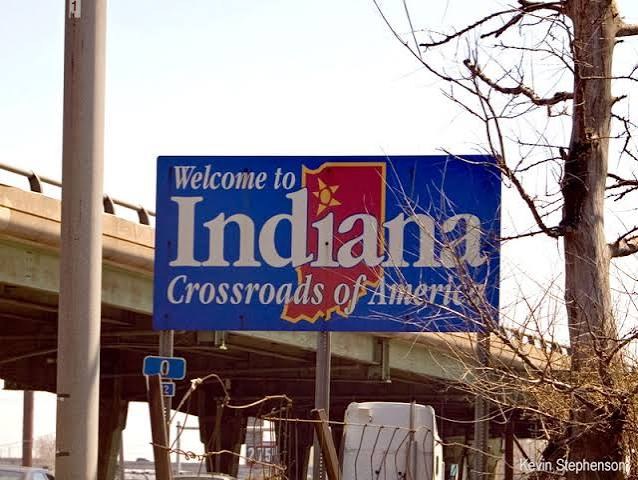
Down-ballot races were similarly consequential, with Democrats flipping more than 40 seats in non-statewide elections and establishing unified Democratic control of government in seven additional states. Although Indiana Republicans managed to keep control of both state legislatures, the 2026 blue wave did not spare the deeply red state.
The race for Secretary of State in Indiana was won by Democratic candidate Beau Bayh, making him the first Democrat to win a statewide election since former Senator Joe Donnelly in 2012. While third party candidates Greg Ballard and Laura Shillings may have pulled votes from Republican nominee Max Engling, Bayh ultimately finished with the majority of the vote and a healthy nine-point margin.
In Indiana’s State House, 16 seats flipped from red to blue in the largest gain by a single party in Indiana in 50 years, leaving Republicans with only a slight majority, retaining 54 of the 100 seats. In addition to the national environment favoring Democrats, the state party managed to recruit candidates in 97 districts, as compared to 74 in 2024, expanding their influence in Indiana’s rural regions.
In St. Joseph County, the blue wave had the same effects as it did nationwide. In the State House District 8, the district that covers Notre Dame, Rep Ryan Dvorak (D-8) won by 30 points against Republican Eric Harris, his widest margin of victory yet.
In the county council, Democrats swept all four seats up for election, giving Democrats a 6-3 majority in the council. Democrats also won five other positions in the state, including County Sheriff, County Assessor, County Auditor, County Clerk, and County Commissioner District 1. In County Council District C, Professor Jamie O’Brien of the Mendoza School for Business lost his bid to regain his old seat to former St. Mary’s College President Jan Cervelli.
Apart from Indiana’s politics, not one incumbent who graduated from Notre Dame lost their seat. The most competitive race a Notre Dame alumnus faced was in Colorado’s third district, where Rep. Jeff Hurd (R-CO) won by a slim two point margin, making him the lone Republican in Colorado’s congressional delegation.
The most surprising margin of victory for Notre Dame graduates was in Nebraska’s second District, where Rep. Mike Flood (R-NE) narrowly defeated his challenger by four points, a large shift from his twenty-point victory in 2024. In Pennsylvania, both Notre Dame graduates won, with Rep. Brendan Boyle (D-PA) winning his deep-blue district and Rep. Mike Kelley (R-PA) surviving the blue wave that swept four incumbent House Republicans in the state. Rep. Rudy Yakym (R-IN), defeated fellow Notre Dame alumna Jamee Decio in the first Notre Dame graduate matchup in another surprisingly close race.
Beyond congressional election results, controversial ballot measures and referendums also attracted significant media attention. In particular, four states considered abortion-related measures, prompting local Catholic bishops in each state to issue public endorsements of the pro-life position.
Idaho was the only state to vote in favor of the pro-life side, voting down a right to abortion that would have overturned the current abortion ban. In Nevada, which is typically a swing state, voters amended the state constitution to protect a right to abortion until fetal viability. In Virginia, a similar right to abortion was passed, shockingly by an even larger margin than a measure to repeal the ineffective same-sex marriage ban, which the Diocese of Arlington also publicly opposed.
In Missouri, a broad ballot measure was lost that would have repealed a previously passed right to abortion in the state as well as gender transition surgeries for minors. Exit polls showed that protecting the right to abortion may have had downballot effects, leading to the surprising loss of the Republican Rep. Ann Wagner in Missouri’s 2nd District.
In addition to Missouri, several other states considered measures concerning transgender rights, producing electoral outcomes that differed considerably from those of the abortion referendums. In the deeply blue states of Colorado and Washington, voters approved proposals to assign people to school sports based on their biological sex and Colorado surprisingly passed a ban on transgender surgeries for minors. Catholic bishops in Colorado and Washington actively supported the initiatives by speaking out in support of biological sex.
Tristan Buttimer is a freshman political science major. Contact him at tbuttime@nd.edu.