
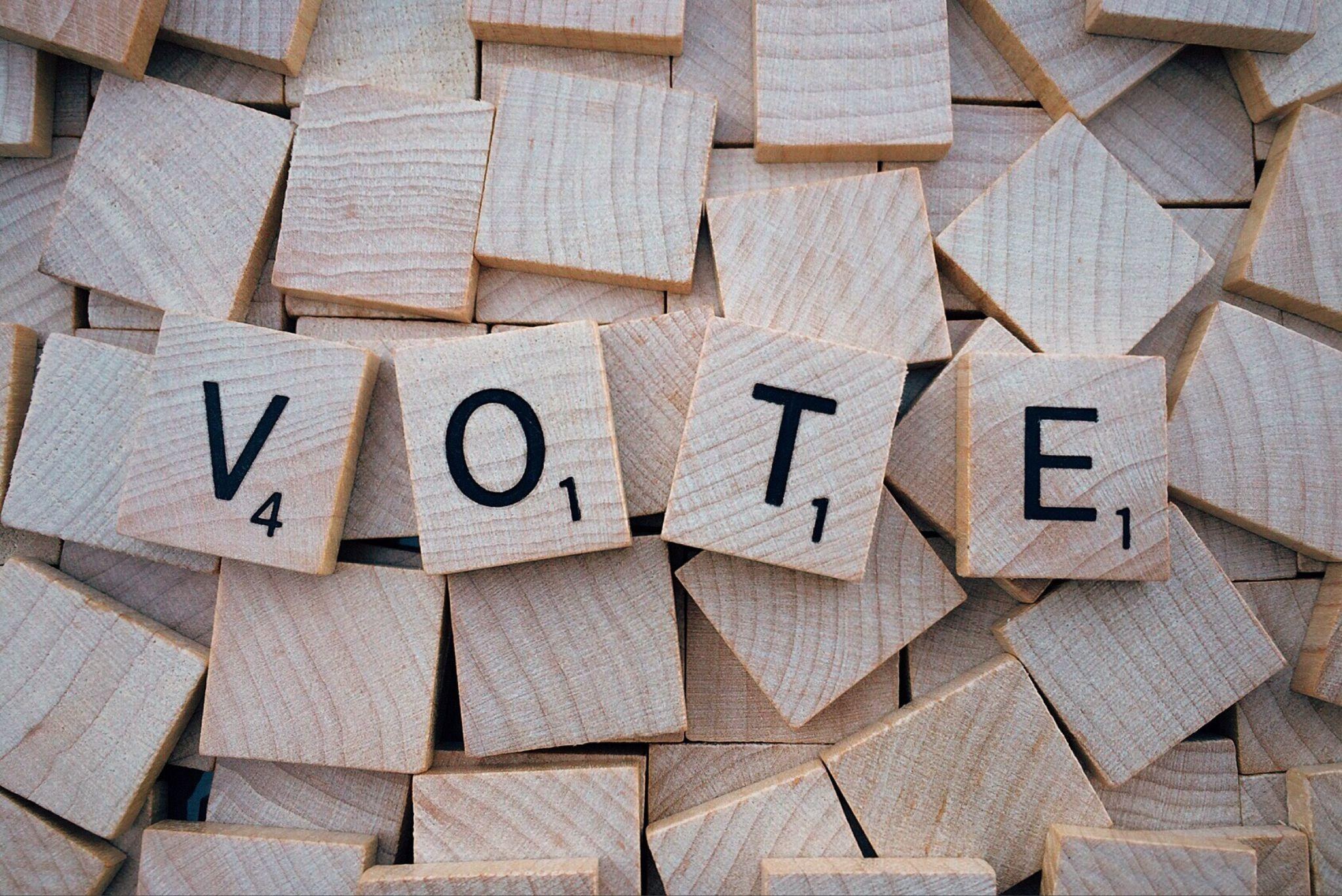
The 2026 midterms are here, and as ever, several centers across campus held events in the lead-up to election day. Many of these were notably forward-looking—both sides of the political spectrum have realized a turning point is here, and much of the campus discourse has addressed the direction of America and our politics.
The Center for Citizenship and Constitutional Government hosted a debate on Wednesday, October 28 titled “Socialism, Populism, Centrism? The Future of Left Politics in America.” The center plans to host a similar event on Friday, November 6, called “The Future of Conservatism After Trump.” The two events—one on each side of the political spectrum—reflect the spread of views held by members of the university.
Rogé Karma, a 2018 Notre Dame graduate and Atlantic staff writer, moderated the October 28 debate between Matthew Yglesias and Bhaskar Sunkara. Yglesias is an opinion writer for the New York Times, podcast host of the Slow Boring podcast, author of the Slow Boring newsletter, and cofounder of Vox. Sunkara is the author of The Socialist Manifesto, a former vice chair of the Democratic Socialists of America and the founding editor of Jacobin, a socialist-leaning magazine.
Both Sunkara and Yglesias emphasized that progressive “moral purity” on social issues is holding the party back from doing what it is supposed to do: help the working class. Sunkara said, “It is an essential task … of any left in politics, to rebuild that connection and that social base, with the working class.”
So what do students think?
Several students told the Rover that they had heard very little about the elections around campus, and that their exposure to politics happened over fall break. These same students who talked to the Rover had all voted, though a few only voted for down-ballot candidates and amendments.
One student told the Rover, “On campus, I haven’t really thought about it. I’m busy. There are really no indications that it’s happening.” While some events pop up on campus, outside of the few posters or yard signs advertising them, the campus doesn’t seem to change the views of students much during election season.
The same student also commented that it worried him that in his hometown, the party he did not vote for seemed very heavily favored. Students of both parties often expressed worry about the result of a win by the opposing party.
One said, “It can be a little daunting to think that the world is facing a huge change soon, and definitely that’s discouraging sometimes.”
Some, however, were more optimistic when it came to their party’s odds. Jeidus DeSeranno, a freshman who voted Democrat, told the Rover that he was very sure that the Democrats would win in his state. He added that he was less worried about losing than he was worried about violence or, as he said, “civil war” if Democrats do win big. He said, “I hope that we can just stay together and move on.”
Many left-leaning, politically active students who spoke to the Rover were less worried about their party winning, and more worried about the overall political climate. Several students whose opinions fell right-of-center seemed less positive overall, and a few expressed that they hoped the Republican party could find itself again in the coming years. Of the students the Rover talked to, there was nearly an even split between political parties.
Notre Dame is fairly unique among top universities in that it can boast a relatively even split between politically conservative and left-leaning students. FIRE says that Notre Dame has one conservative student to every 2.37 liberal students, but notably only interviewed 243 students in that survey. A more accurate picture may be painted by the results of the Notre Dame Marriage Pact. With over 3,000 respondents, it provides a more comprehensive picture of the state of the student body.
According to the Marriage Pact, 34.4 percent of respondents at Notre Dame identify as either socialist, liberal, or democrats, while 39.8 percent identify themselves as Republican or conservative. This gives a rough ratio of 1.16 conservatives to one liberal on Notre Dame’s campus—nearly even. A 2024 Gallup poll said that the ratio in America is approximately 1.4 conservatives for each liberal, but in most universities liberal students predominate.
Given that Notre Dame is so unique in this way, it is not surprising that students feel they have to hide or hedge their opinions sometimes. The polarization on campus is reminiscent of the polarization found more broadly in American Catholicism, with a similar partisan divide.
Anthony DuVinage is a first-year PLS and political science major. He can often be found wondering why he can’t write more eloquently, or absentmindedly sipping on coffee in the PLS lounge. If he’s not there, he can be reached at aduvinag@nd.edu.