
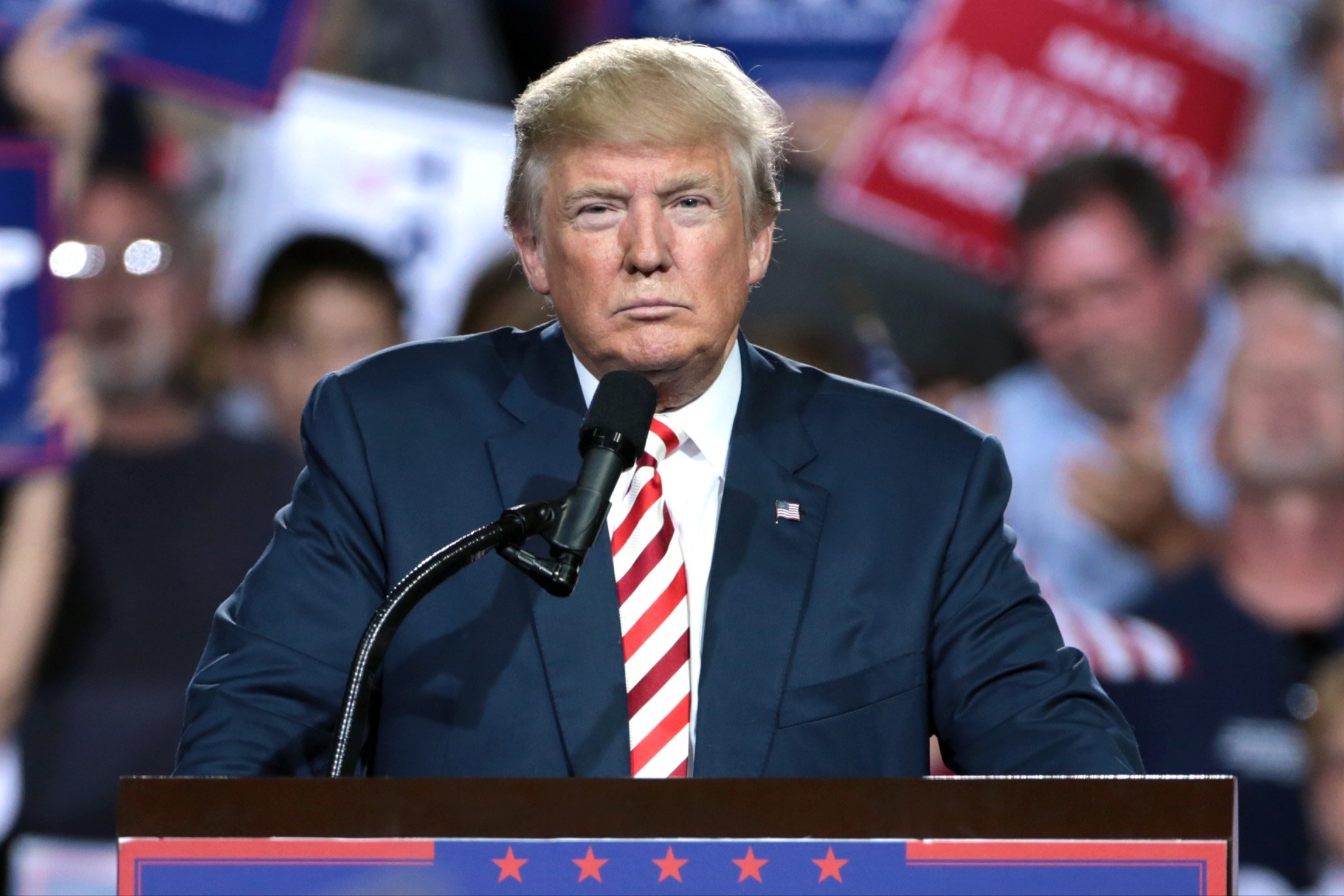
Three days after the November 3 midterm elections, the Center for Citizenship and Constitutional Government (CCCG) hosted a panel on “The Future of Conservatism After Trump.”
Panelists included Kimberly Strassel, Ryan T. Anderson, and Michael Anton. Strassel, a member of the Wall Street Journal editorial board, writes the weekly Potomac Watch column. She is also a Fox News contributor and the author of The Biden Malaise.
Anderson, who earned his Ph.D. in political philosophy at Notre Dame, is president of the Ethics and Public Policy Center, a think tank in Washington, D.C. Trump appointed him to the Religious Liberty Commission in 2025. He is a co-author of What is Marriage? A Defense: Man and Woman, alongside Notre Dame law professor Sherif Girgis.
Anton is a senior fellow at the Claremont Institute and a lecturer at Hillsdale College. He served as the State Department’s Director of the Secretary’s Policy Planning Staff in Trump’s second term, from January 2025 to September 2025. He is best known for “The Flight 93 Election,” his 2016 essay comparing that year’s election to the hijacked flight whose passengers stormed the cockpit, which rallied conservatives behind Trump.
Vincent Philip Muñoz, CCCG director and panel moderator, began by asking, “Why did the Republicans lose so badly on Tuesday?”
Strassel responded saying, “There is nothing that is more politically damaging to a member of any office than high prices and inflation, and there is no question that Trump’s tariffs on key goods, ones that are essential for the economy, contributed to this.”
Anton blamed the GOP losses on the Iran war. He said “Trump had won in 2024 by saying, ‘I didn’t start any new wars,’ a message that appealed to younger voters of both parties who are as anti-war, if not more anti-war, than young people were during Vietnam.”
Muñoz then asked whether the results were “a vote against Trump as opposed to a vote for Democrats.” In response, Strassel called the outcome “a repudiation of the Republican Party and not an approbation of Democrats,” noting that Iowa and North Carolina voters approved tax limits on the same ballots that elected Democrats. Anderson also highlighted that conservative policies were succeeding where conservative candidates failed, stating,“Even in deep blue states, people were rejecting trans ideology.”
Asked what the Right should “retain from Trump and Trumpism and what should be jettisoned,” Anderson replied, “Trump was willing to fight on certain cultural issues in a way that no Republican president during my lifetime has.” Strassel agreed: “He was tough, and I think that is the most important thing that the Republican Party can take from Donald Trump.”
Anton argued for returning to the agenda Trump first ran on. “Some form of basic foreign policy restraint needs to be retained,” he said, predicting that the party’s foreign policy “is inevitably going to be closer to what Trump was talking about in 2015.”
On what to jettison, Anderson said, “I think he learned the wrong lesson from Dobbs and he has been afraid of doing anything remotely pro-life after Dobbs was decided.” He added that “historically the conservative movement was against vice,” pointing to marijuana and betting markets, which he said are “particularly bad for” working-class men.
When Muñoz asked whether Trump was “punished for the ICE raids,” Anderson said, “The way in which some of the raids were executed almost seemed like they were intentionally being maximally terrorizing so that people would then self-deport. I think that backfired.”
When asked about how to address the rising popularity of the Left, Anton described the Democratic Party as “two parties welded together.” There is both a “credentialed, highly paid class” and “a kind of lumpen Left where all the energy is.” Of the activists, he said, “We can’t get rid of them, we have to pacify them, but we also can’t hand the keys over to them because they’ll drive the car off a cliff.” Strassel said, “The greatest tragedy of this loss is not just that Republicans lost, but they lost in the year when Democratic socialists made their big move on the party,” pointing to Abdul El-Sayed’s win in Michigan.
Anderson also explained why so many religious voters first backed Trump. “The reason that 10 years ago so many people voted for Trump the first time was that in November of 2016, it looked like institutions like Notre Dame could be losing their non-profit tax status if they continued operating according to orthodox Catholic beliefs,” he said. He cited bakers, florists, photographers, Catholic adoption agencies and “orders of Catholic nuns that had to pay for contraception.” “I think a bunch of evangelicals and Catholics said, ‘This is crazy. I’m not voting for her, I’m voting for him.’”
Asked for advice to Democrats, Anton said, “You need to restrain your crazies.” Strassel’s advice to Republicans was simpler: “Good policy is good politics.”
Luke Severson is a sophomore political science major. His favorite hobby is boating on the beautiful lakes of northern Minnesota. Contact him at lseverso@nd.edu.